


I have a confession to make.
I retracted the article I had written last week because it felt outdated and rewrote it this past weekend on a trip with my family. This is not a job where one “clocks out” easily.
Let’s recap. The year started strong, the first quarter ended ugly, and my-oh-my the first four days of the second quarter just got uglier.
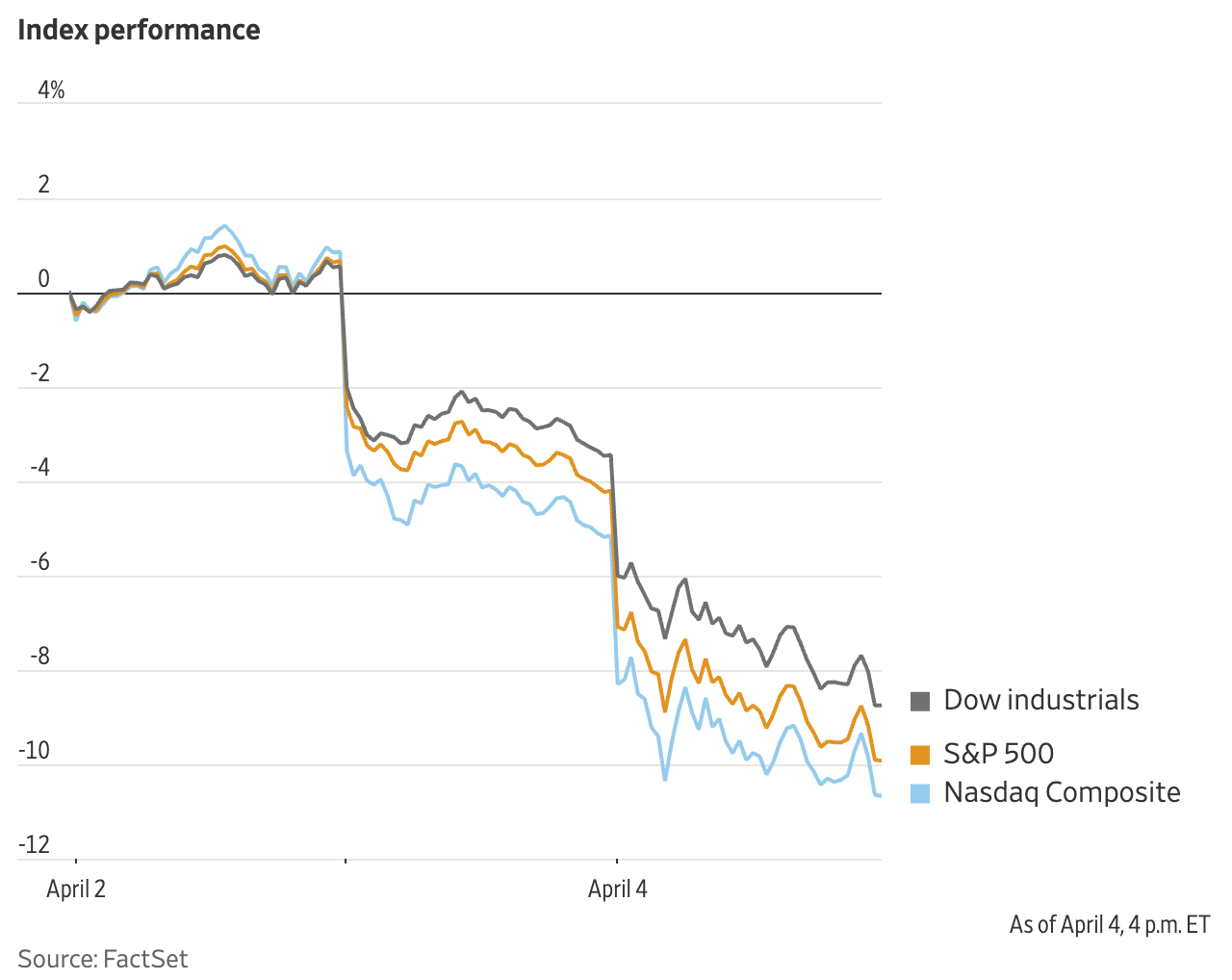
"Liberation Day" occurred last Wednesday, and the stock market did not get the liberating memo. Stocks followed up with their worst day since the pandemic in March of 2020. And the sharp selloff continued Friday making for a brutal two days.1
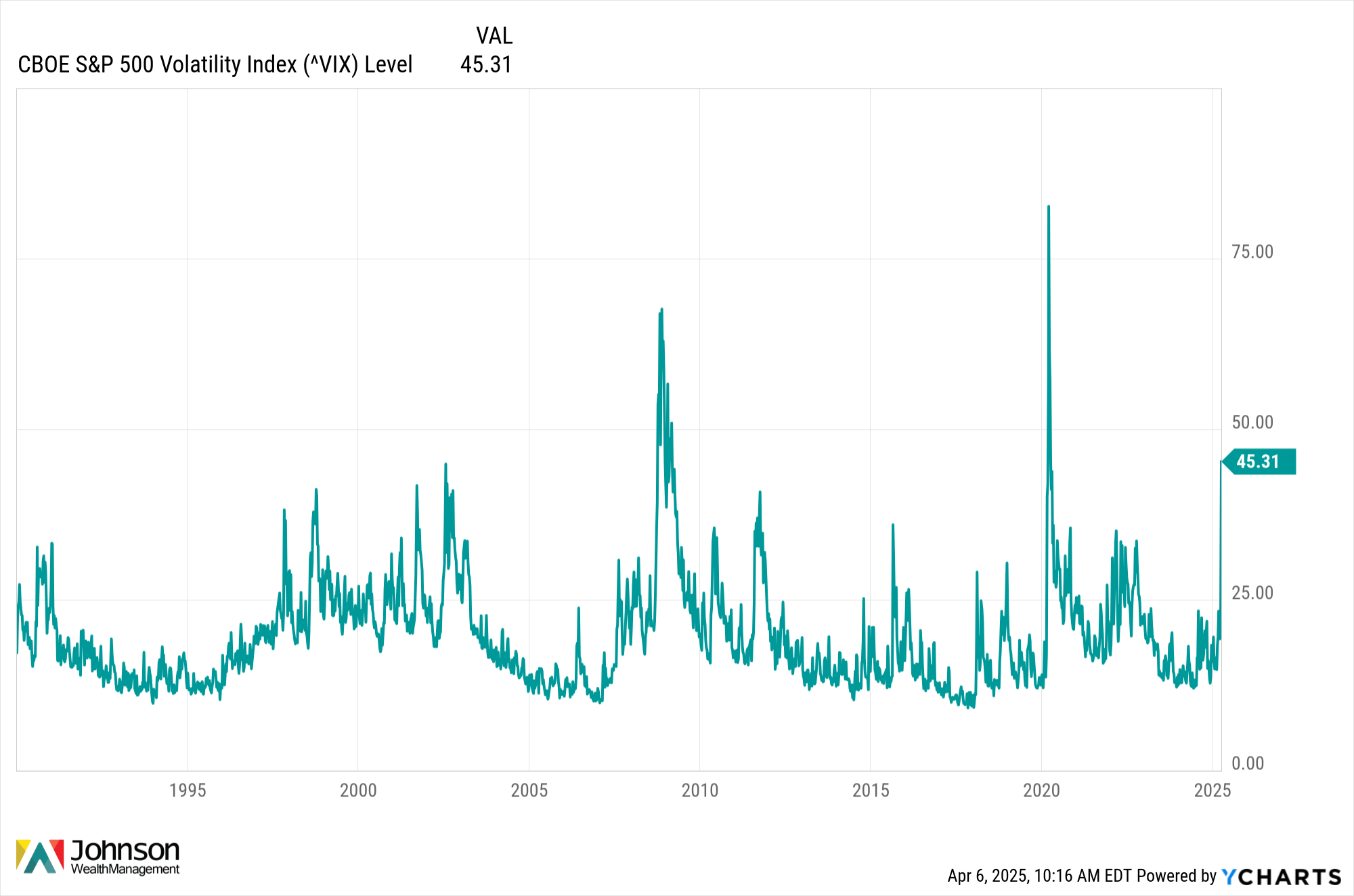
The VIX index—known as a measure of volatility—has spiked to levels not seen since the days of COVID and the Great Financial Crisis (though it has not quite reached those heights).
It’s totally normal right now to be fearful and curious as to the where “the bottom” is. But allow me to let you in on a secret: that is virtually unknowable.
Not only are stock prices unpredictable, but the current administration’s tariff policy has been unpredictable, and the response of other nations is also unknown. We could know more in months, weeks, or days.
What I said less than a month ago is still true:
…when uncertainty increases, we can expect increased volatility; however, you must be careful in trying to guess what the market may or may not do based on the constant stream of news updates. If you change your portfolio as much as the news changes on tariffs, you might make a trade that is more contingent on the present than where you want to be financially in the future—and drive yourself a little bonkers all along the way.
Jason Zweig, the wise financial writer from the Wall Street Journal, said it better than I in his column Friday:
If you overhaul your entire portfolio in response, you aren’t just acting as if you know what the market is going to do next, which is close to impossible. You’re also acting as if you know what Donald Trump is going to do next—which is impossible.2
Michael Cembalest, in his recent JP Morgan Chase memo, strikes an optimistic note amid the tariff shock and offers an attempt to look beyond it:
We’re probably near peak policy uncertainty and as a reminder, even if tariffs stick around, they are a one-time rather than perpetual hit to growth and inflation. Eventually, infrastructure permitting reform and banking deregulation may also provide offsetting boosts to growth.3
One thing we can know right now is that in the past when volatility spikes, recoveries can follow.
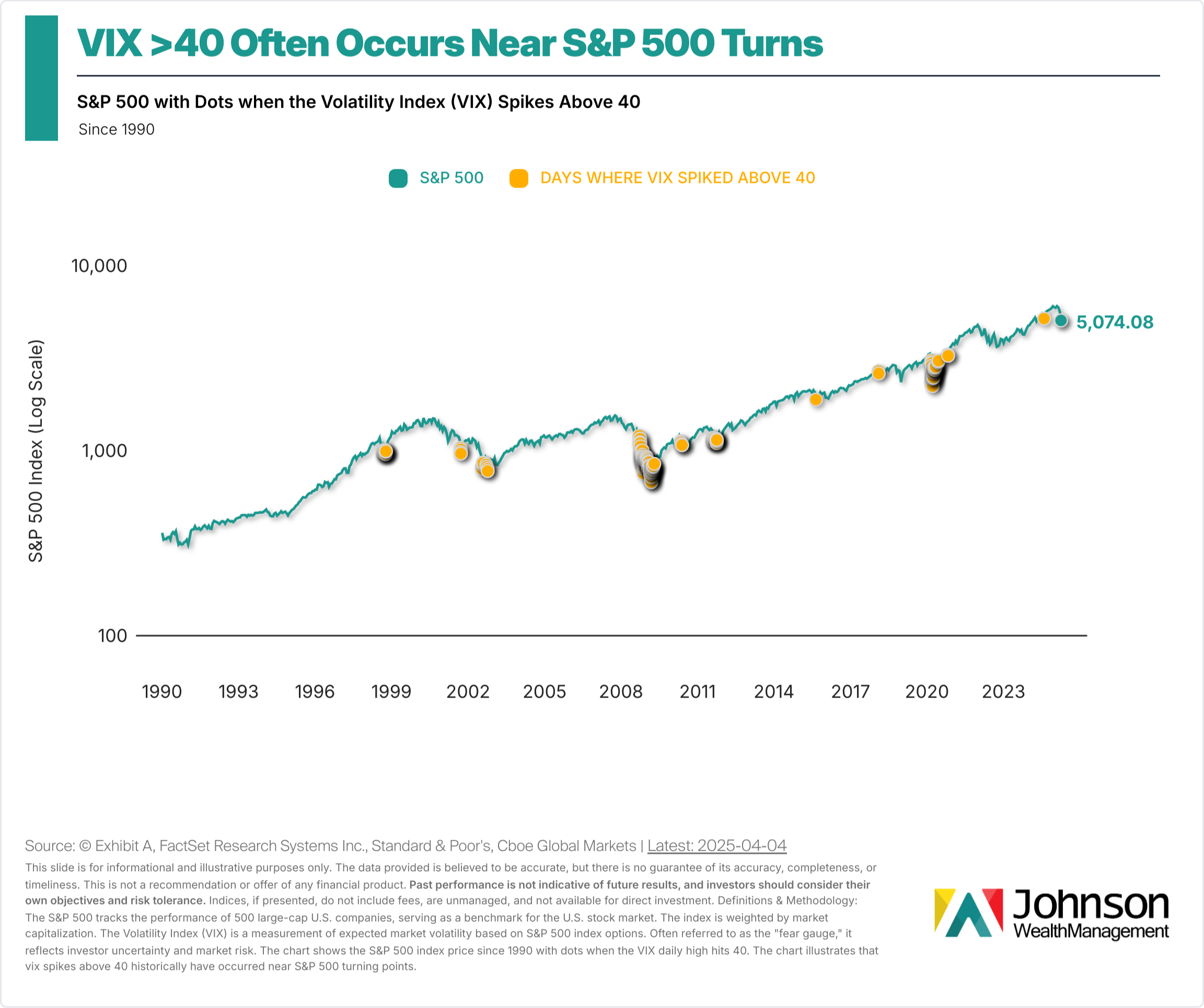
One must be realistic though.
Notice how those can cluster. This means the downtrend can last awhile.
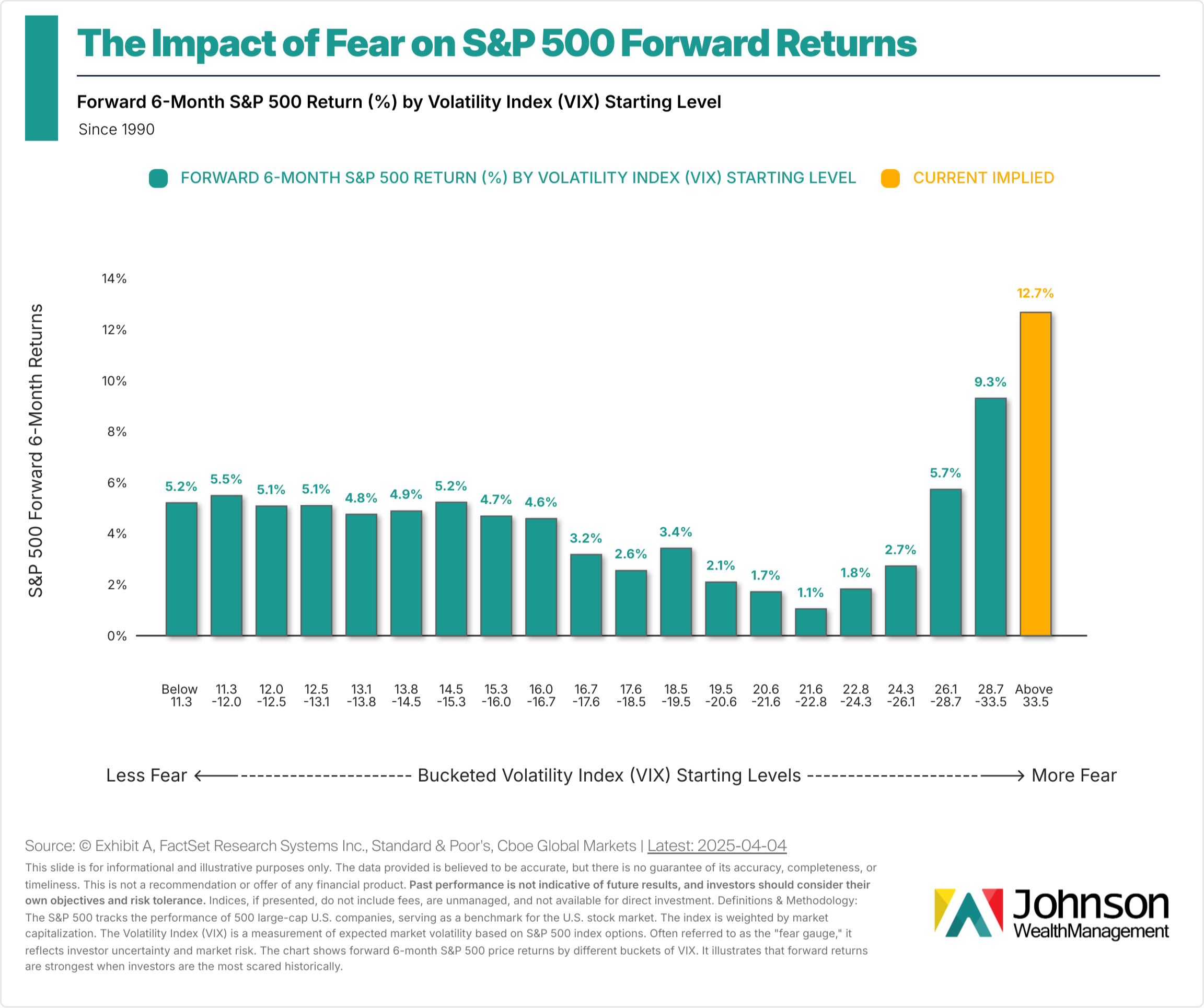
The good news is that this kind of fear has historically been followed by excellent returns.
Here is something to keep at the forefront of your mind in all this.
Life is not determined by a bad few months. Nor is your investment life.
I can live with retracting an investment column due to unpredictable news.
Investment portfolios and financial plans don’t normally survive making erratic trades.
Be careful that you don’t make an investing mistake that leads to a confession of financial regret later.
---
Sources:
1. WSJ. Accessed online: https://www.wsj.com/finance/stocks/u-s-stock-futures-fall-further-after-china-retaliates-against-trump-tariffs-3be33fa7?mod=finance_lead_pos1
2. “Trump Just Shredded the Economic Playbook: Here Are Your Next Investing Moves” (April 4, 2025). Accessed online: https://www.wsj.com/finance/investing/trump-tariffs-investing-stocks-a12ce6e5
3. “Redacted”, Eye on the Market, p. 4. Accessed online: https://am.jpmorgan.com/us/en/asset-management/institutional/insights/market-insights/eye-on-the-market/redacted/