


What should you do if you hear the stock market might go down?
The first thing to do is not be surprised. Take it in stride.
It is not unusual to hear pundits forecast declines, especially in a news cycle that loves outrage and big headlines. It is also totally normal for investors to experience them. No investor should live under the illusion that stocks always go up.
In the average year the market goes down 1% or more on about 30 out of the 250+ trading days during the year.
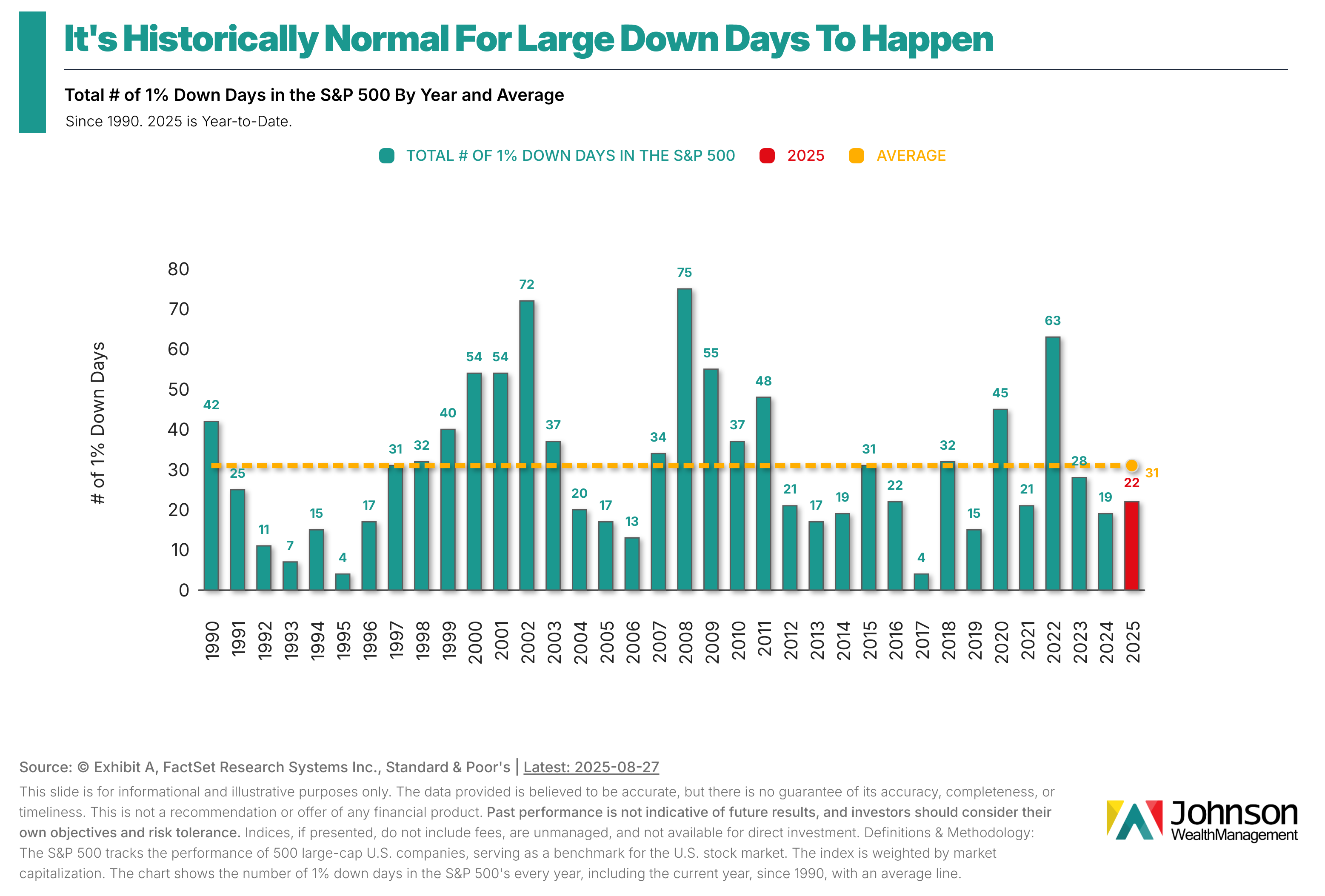
Corrections and bear markets also occur.
Though many purport to know when they may happen, they probably don’t.
Let’s peel back the curtain more: your financial advisor or favorite investment expert likely doesn’t either.
Take it from one of the best investors, Peter Lynch, who averaged an annual return of 29% managing the best performing mutual fund around, and said it like this in an interview many years ago:
Now no one seems to know when there are gonna happen. At least if they know about 'em, they're not telling anybody about 'em. I don't remember anybody predicting the market right more than once, and they predict a lot. So they're gonna happen. If you're in the market, you have to know there's going to be declines. And they're going to cap and every couple of years you're going to get a 10 percent correction. That's a euphemism for losing a lot of money rapidly. That's what a "correction" is called. And a bear market is 20-25-30 percent decline. They're gonna happen. When they're gonna start, no one knows.1
Truth doesn’t always feel good. Reality sometimes bites.
He goes on with some excellent advice:
If you're not ready for that, you shouldn't be in the stock market. I mean stomach is the key organ here. It's not the brain. Do you have the stomach for these kind of declines? And what's your timing like? Is your horizon one year? Is your horizon ten years or 20 years? If you've been lucky enough to save up lots of money and you're about to send one kid to college and your child's starting a year from now, you decide to invest in stocks directly or with a mutual fund with a one-year horizon or a two-year horizon, that's silly. That's just like betting on red or black at the casino. What the market's going to do in one or two years, you don't know. Time is on your side in the stock market. It's on your side. And when stocks go down, if you've got the money, you don't worry about it and you're putting more in, you shouldn't worry about it. You should worry what are stocks going to be 10 years from now, 20 years from now, 30 years from now.2
The key for investors is 1) developing a stomach that can handle the tummy aches of declines and 2) having an extended span of time along their investment horizon.
What if the worst came true though, and the news you heard was right? What if the most recent market high was the top? To make it worse: what if you had literally just invested all of your money or a substantial amount the day the market peaked before a big decline?
I have good news for you.
When this has happened in the past, those who have stayed invested have done well.
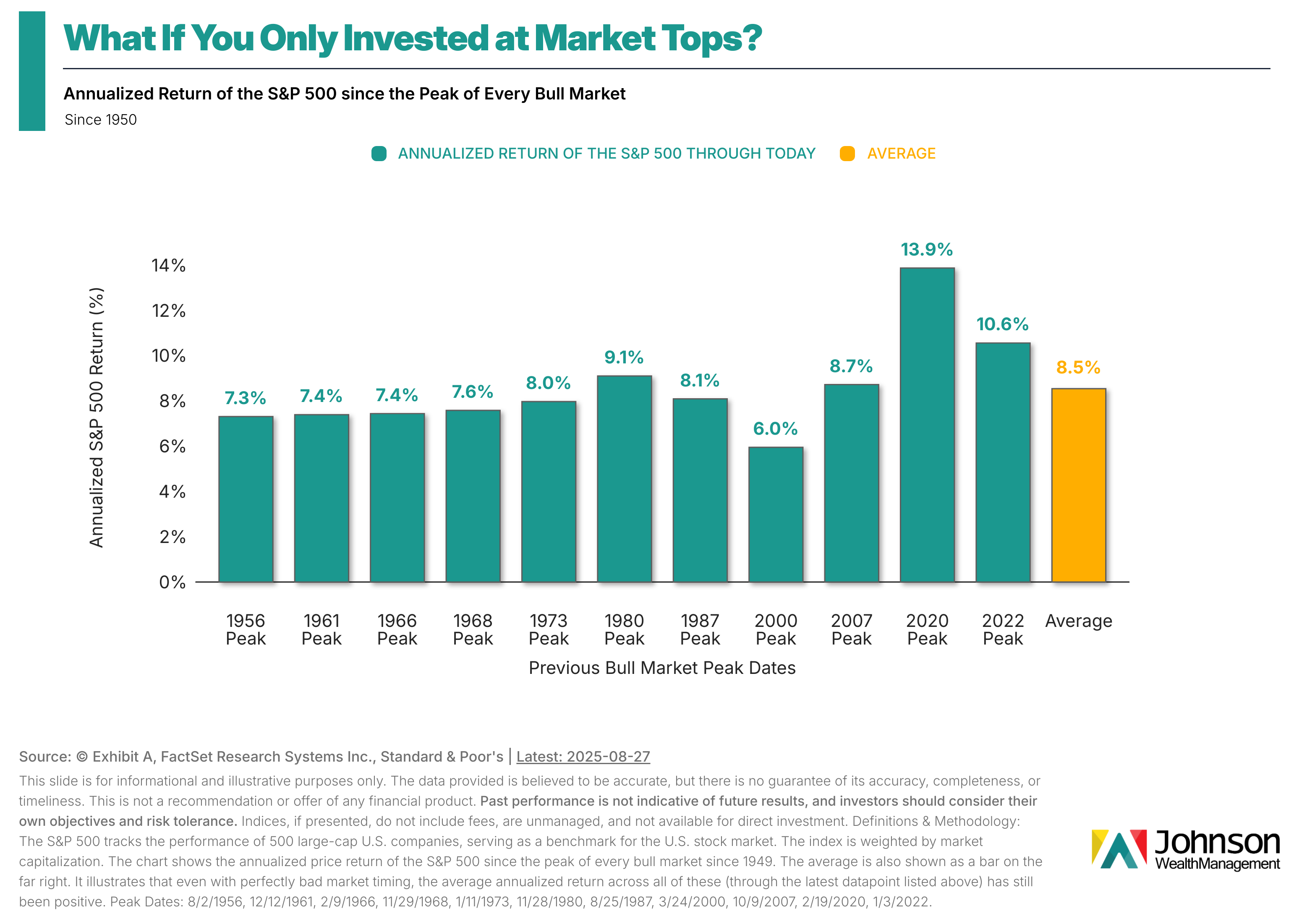
Those that invested at the peak would have still averaged an 8.5% return.
Wild.
Not everyone will average the investment returns of Peter Lynch, but we can all learn from his wisdom.
To use his words, it’s silly to be hung up on short-term declines with long-term investments.
And the brutal truth: You should not be in the stock market if you can’t handle large declines.
I say all this, not because I’m making a prediction on the direction of stocks—though Investor’s Business Daily just reminded its readers that “September is actually the weakest month of the year for stock performance”—but because it’s good to remind investors of reality.
Don’t be a silly or surprised investor.
If you need help knowing what to do, reach out to us.
---
Sources:
1. From PBS and Frontline’s interview with Peter Lynch. Accessed online: https://www.pbs.org/wgbh/pages/frontline/shows/betting/pros/lynch.html
2. Ibid.