


The last month or so has been painful for investors.
As of last Friday morning, the S&P 500 was off about 9% and the more tech-heavy Nasdaq was off 15%. This has happened quickly, contributing to what some might call “sticker shock” when they look at their accounts online.
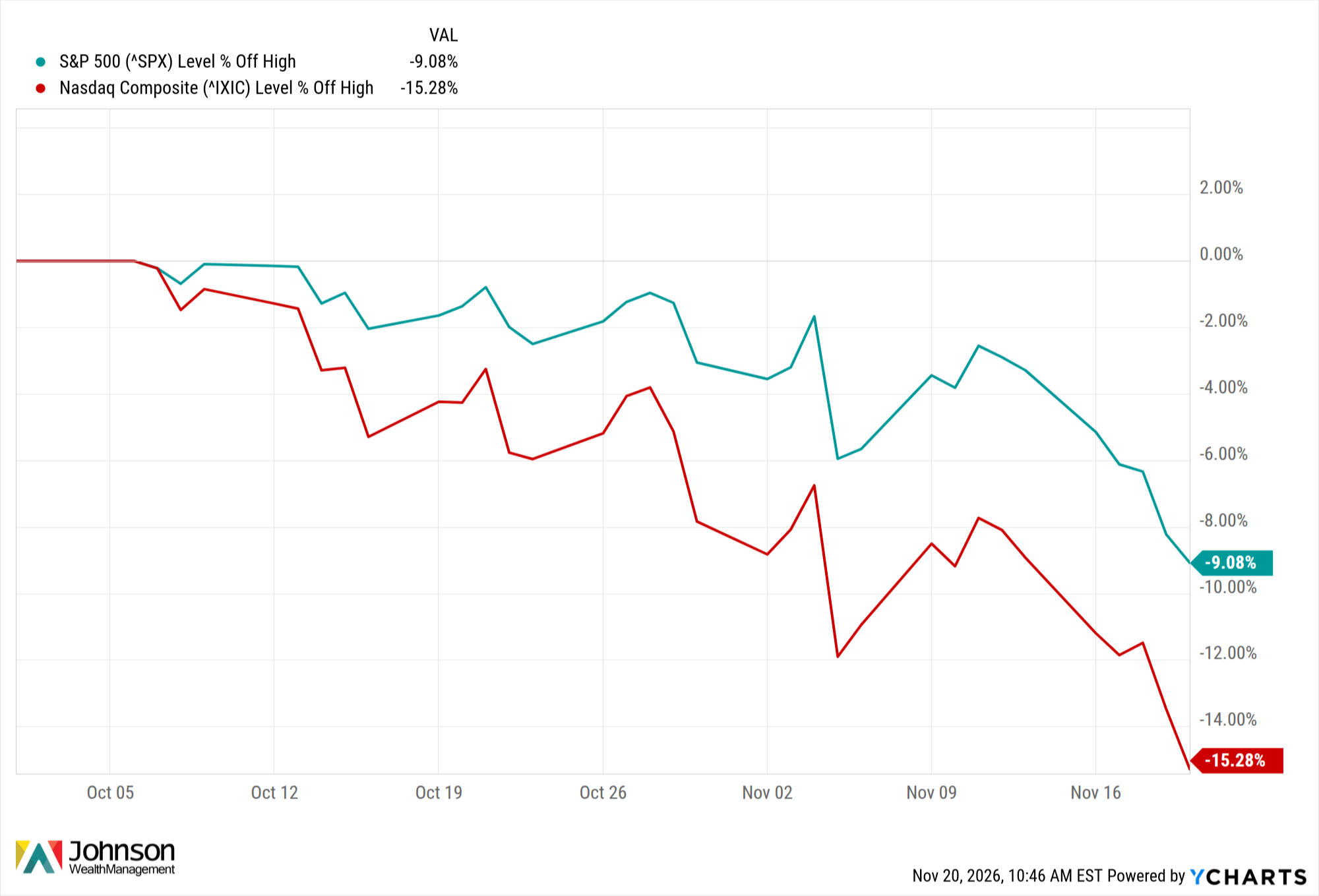
The negative sentiment around AI companies and their influence on the technology sector has been weighing down the overall markets. The Anthropic IPO didn’t change that sentiment much, on the day of the IPO at least. DataTrek research points out:
October 5th and 6th were the YTD highs not just for the S&P 500, Nasdaq Comp, the S&P Tech sector, and Nvidia, but also 10-year US Treasury yields. NVDA’s swoon explains 41% of the S&P’s decline since then, and the tech sector accounts for all of it…1
We often point out that tech can lead markets on the way up and the way down.
Some investors may see this kind of decline as a buying opportunity, especially when looking at valuations. The price-to-earnings ratio of the tech sector is back to lows not seen since COVID, according to Schwab researcher Kevin Gordon.2
I don’t give recommendations over the Internet, so that wasn’t one. But I do give reminders.
The long-term investor should expect the kinds of bumps we are experiencing in the markets. We haven’t even reached the average drawdown of 14% in the S&P 500 that can happen each and every year.3
You don’t get the rewards of the stock market without the risk of the stock market. And being too conservative with your money is its own kind of risk. Cullen Roche, Founder of Discipline Funds, recently published a great chart that shows how time cures stock market risk but compounds the risk of cash and government bonds.
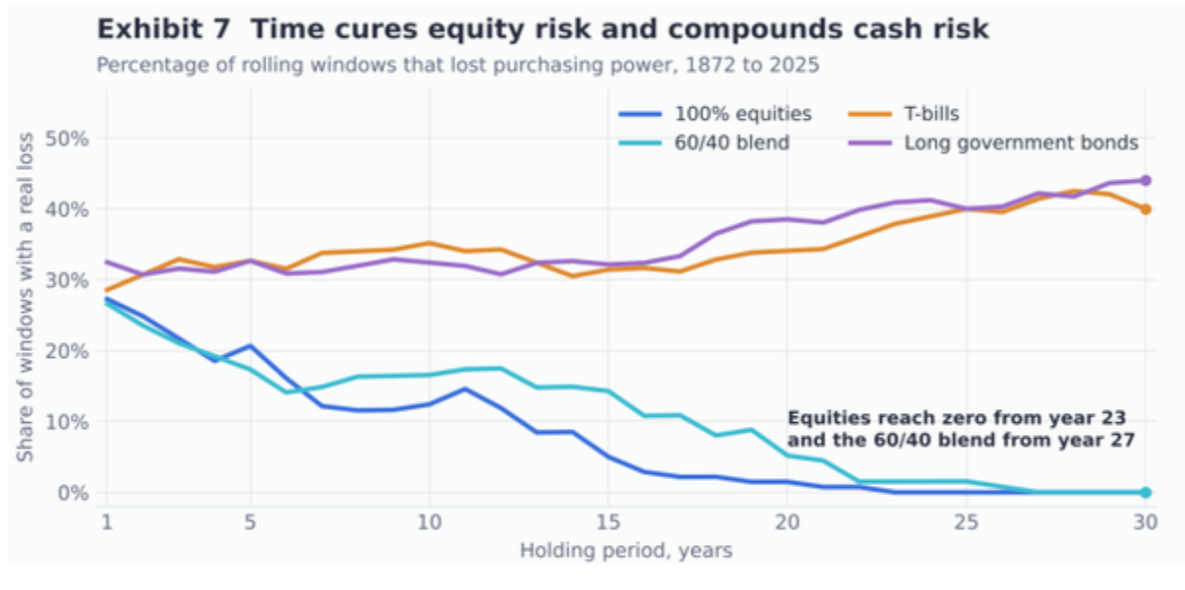
Since 1872, the risk for long-term investors has been holding too much cash, Treasury bills, or long government bonds, while the risk for short-term investors has been holding too much stock.4
Threading the needle for investors through risk management is what is critically important. Investors can make bad decisions when their portfolio is dropping. They sell too much because they perceive risk to their money in the moment and not the risk to their money over the long term.
Though past performance doesn’t guarantee future results, if history repeats itself, this current selloff will fulfill the words of financial writer Morgan Housel: “This is the worst market decline since the last one you don’t remember or care about anymore."
You must focus on your investment timeframe and your financial targets. This is what should drive the investment decisions you make. If you ever feel like your investment portfolio is traumatizing you, be careful about being your own financial therapist and making decisions that might haunt you later. Consider this humdinger of a quote: “The market may be crazy, but that doesn’t make you a psychiatrist.”
Let me leave you with some potential good news. Fear in the present markets can pay off in the future. The volatility index, which measures fear in the markets, has been cranking higher. Historically, investing when it gets scary out there has produced solid total returns in the future. Here is what Chief Market Strategist at Creative Planning Charlie Bilello had to say last Friday5:
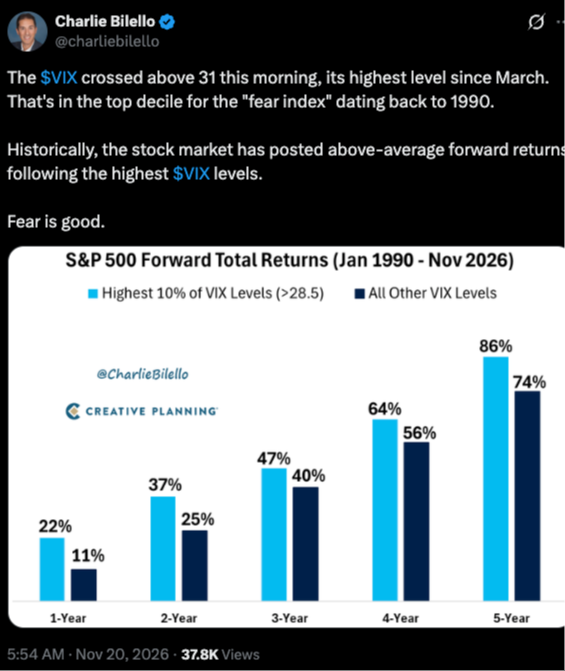
This doesn’t mean stocks can’t get worse. They can.
If you or someone you know needs help with managing risk in their investment portfolios, reach out to us at www.liveandleavealegacy.com.
—
Sources:
1. Posted on X by @DataTrekMB on November 18, 2026. Accessed online.
2. Posted on X by @KevRGordon on November 17, 2026. Accessed online.
3. JPMorgan’s monthly “Guide to the Markets”. Page 16 of October 30, 2026 version: “Annual Returns and Intra-Year Declines”. Accessed online.
4. “New Research: The Price of (Un)Certainty” published on November 2, 2026. Accessed online.
5. Posted on X by @charliebiello on November 20, 2026. Accessed online.