


Investors are feeling bad about the market.
Bespoke research notes the following:
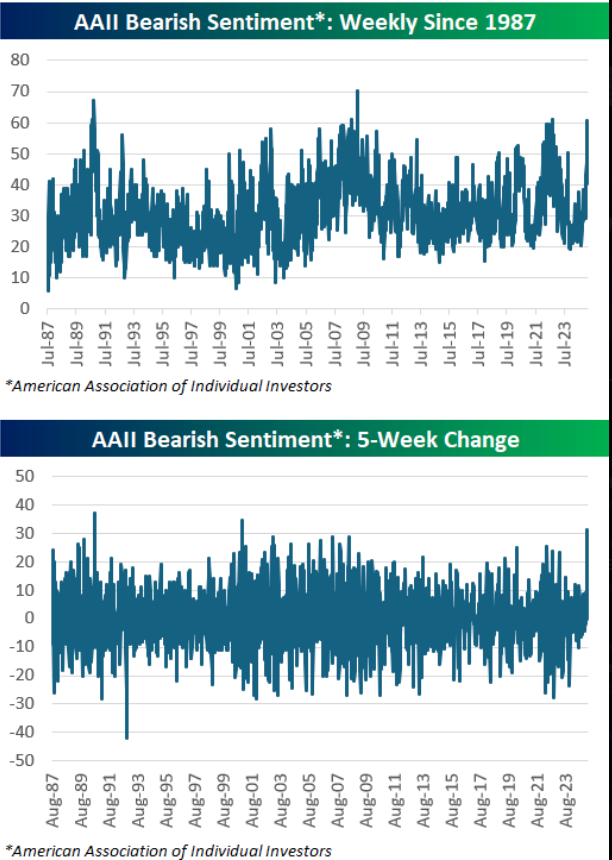
Retail investors have been spooked to a historic degree!!!
AAII Bearish sentiment ticked above 60% for just the sixth time in its history dating back to 1987.
The 5-week change in Bearish sentiment is the 3rd highest in history behind only Dec. 2000 and Aug 1990.1
First things first.
"Historically" is a stretch because that survey has only been around since 1987, and I’m older than that and I don’t consider my lifespan historic.
Nevertheless, CNN’s Fear & Greed index is also detecting the switch in sentiment.2
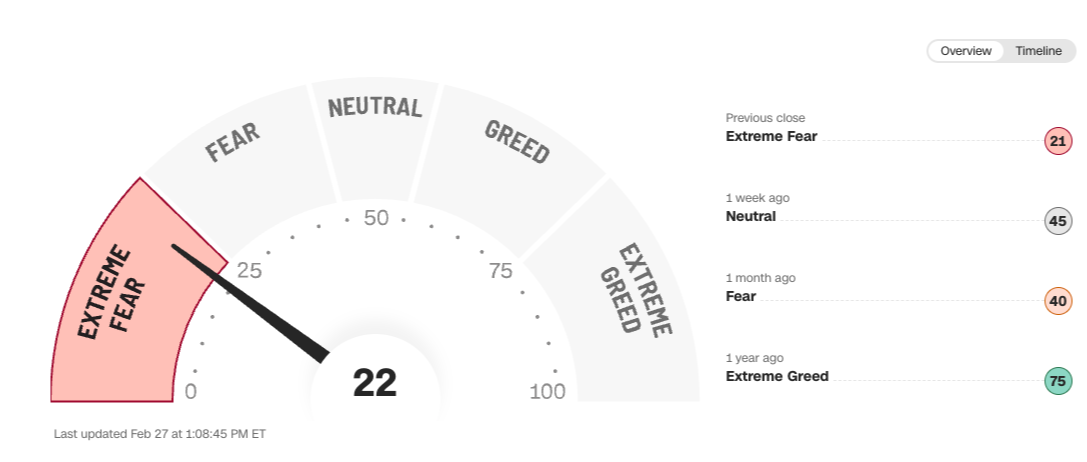
“Extreme fear” seems a bit overstated as the markets aren’t off significantly. Who knows what Friday held, but after market close on Thursday, February 27th, the only index down from its highs anywhere near 10% is the tech heavy Nasdaq, while the others haven’t even had a 5% dip.
Matt Cerminaro shows how unusual this sentiment switch is at this point, as there have never been this meany bears in the retail market with such a small decrease in stock prices.3
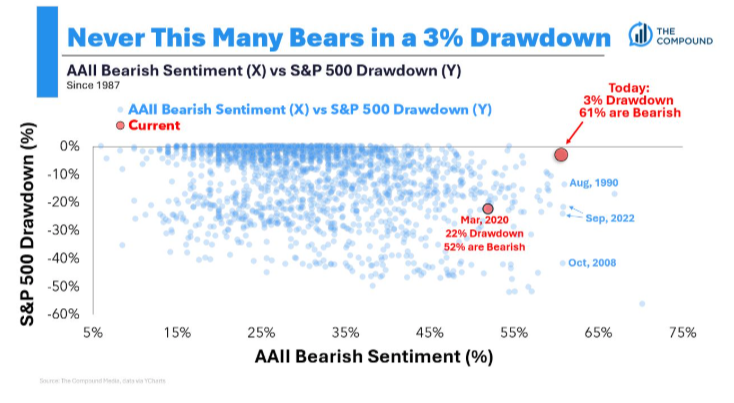
What if we went into a bear market and a 20+ percent drawdown?
What if…
Investors always should be ready for what if’s—be they negative or positive.
I’m not predicting a bear market because we don’t make predictions here.
We manage wealth in good times and bad, with President’s you like or don’t like, and whether our clients feel good or feel bad about stocks.
No one knows for sure if/when the market will dip hard. But all investors need to be aware and be prepared if they do happen.
According to a writer over at Kiplinger: “Since 1932, bear markets have occurred, on average, every 56 months (about four years and eight months), according to S&P Dow Jones Indices.”4
If you don’t have a portfolio that can handle a bear market, you likely do not have the right portfolio.
Write that down. Put it on a sticky note next to your monthly statement or plaster it on your wallpaper on your computer.
The good news is the length of bull markets have far extended bear markets.5
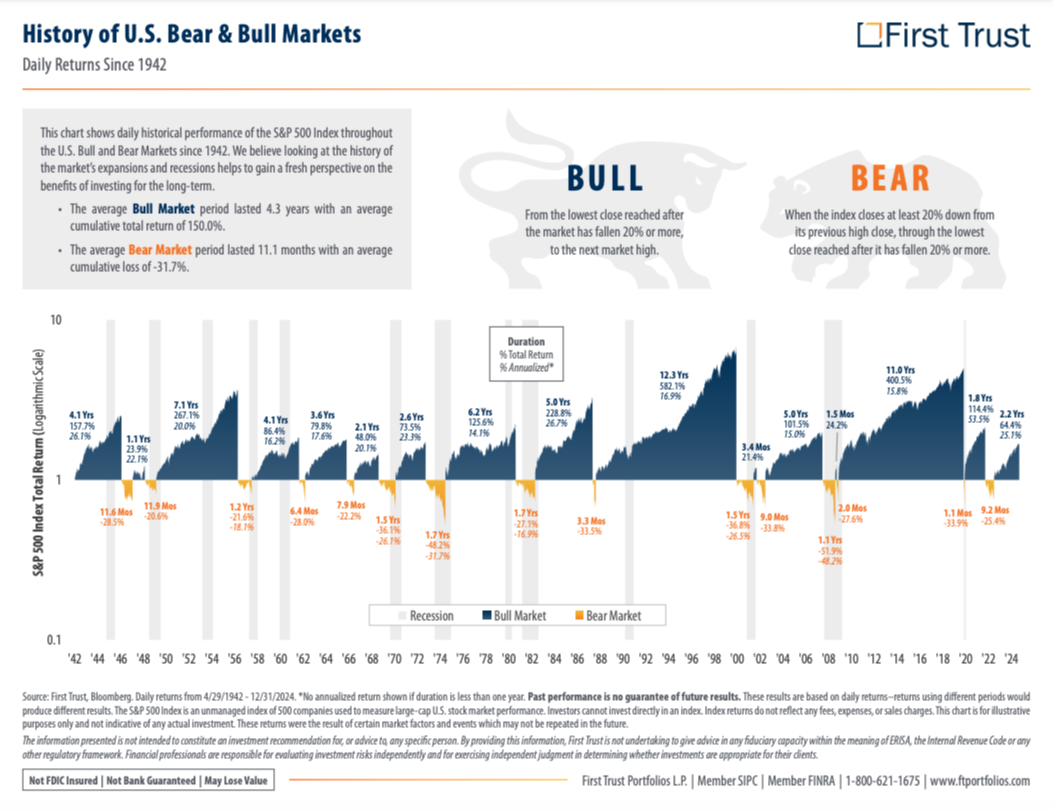
This doesn’t minimize the pain of watching account values get hit. Some of those declines are brutal. But it does put it in context.
Here is one more encouraging chart from Ryan Detrick to close this out. When the AAII sentiment indicator has been this bad, investment returns have usually (apart from the Great Financial Crisis) been good over the next 12 months.6
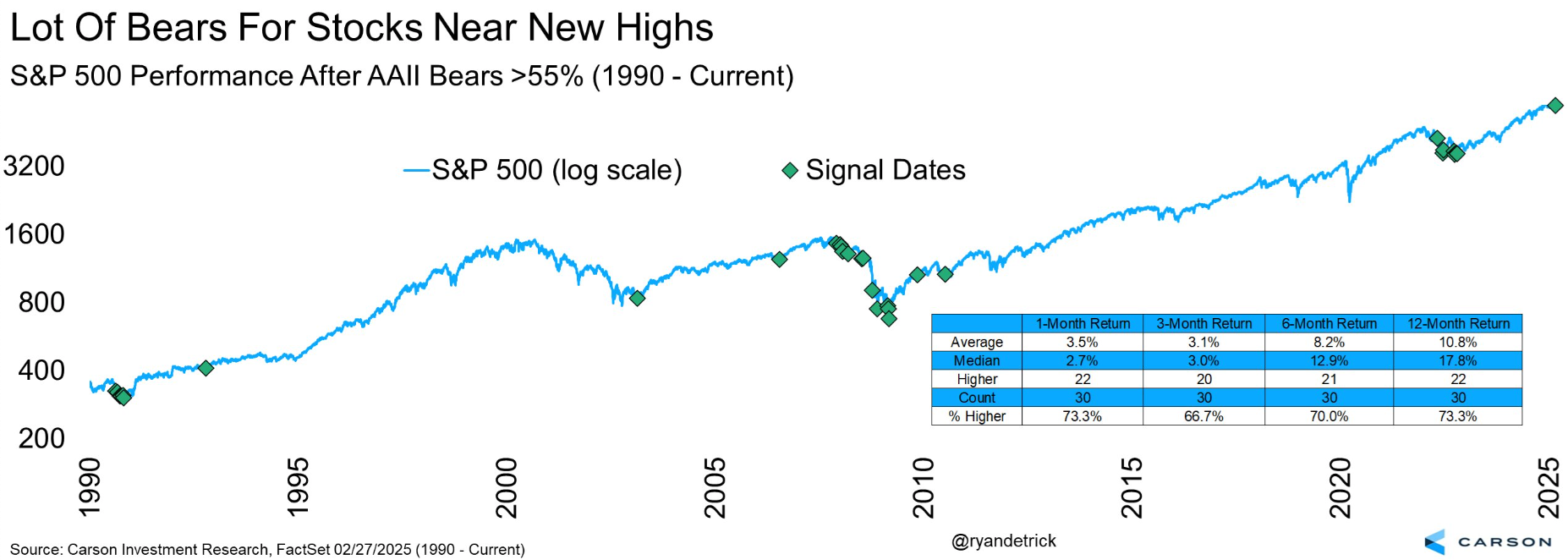
I want to arm you with data so that you can make informed investment decisions that may help you in the long run.
Investing is a marathon not a sprint.
Know where you are in your investing journey and with your financial goals and don’t get all lathered up in your feelings.
Some investors may need to take the words of Gene Hackman’s (who passed away the day I write this) Lex Luthor to Superman to heart: “Why don’t you do yourself a favor, and take a chill pill.”
Others need the bittersweet reminder that stocks (even your favorite ones with high price targets) don't always go up.
---
Sources:
1. Published 2/27/25. Accessed online: https://x.com/bespokeinvest/status/1895086706157588715
2. https://www.cnn.com/markets/fear-and-greed. Accessed online: 2/26/25.
3. Published 2/27/25 on LinkedIn by Michael Batnick: HERE.
4. “How Often Bear Markets Occur and 7 Other Facts About Them” by Dan Burrows on May 22, 2024. Accessed online: https://www.kiplinger.com/slideshow/investing/t052-s001-8-facts-you-need-to-know-about-bear-markets/index.html
5. “History of U.S. Bear & Bull Markets”, First Trust. Accessed online: https://www.ftportfolios.com/COMMON/CONTENTFILELOADER.ASPX?CONTENTGUID=4ECFA978-D0BB-4924-92C8-628FF9BFE12D
6. Published 2/27 on X. Accessed online: https://x.com/RyanDetrick/status/1895107530931474799/photo/1