


Interest rates are heading up again, which is why bonds are dipping a bit in 2026.
One of the reasons for this is inflation. Things like rising gas prices have contributed to its rise to highs not seen in a few years.
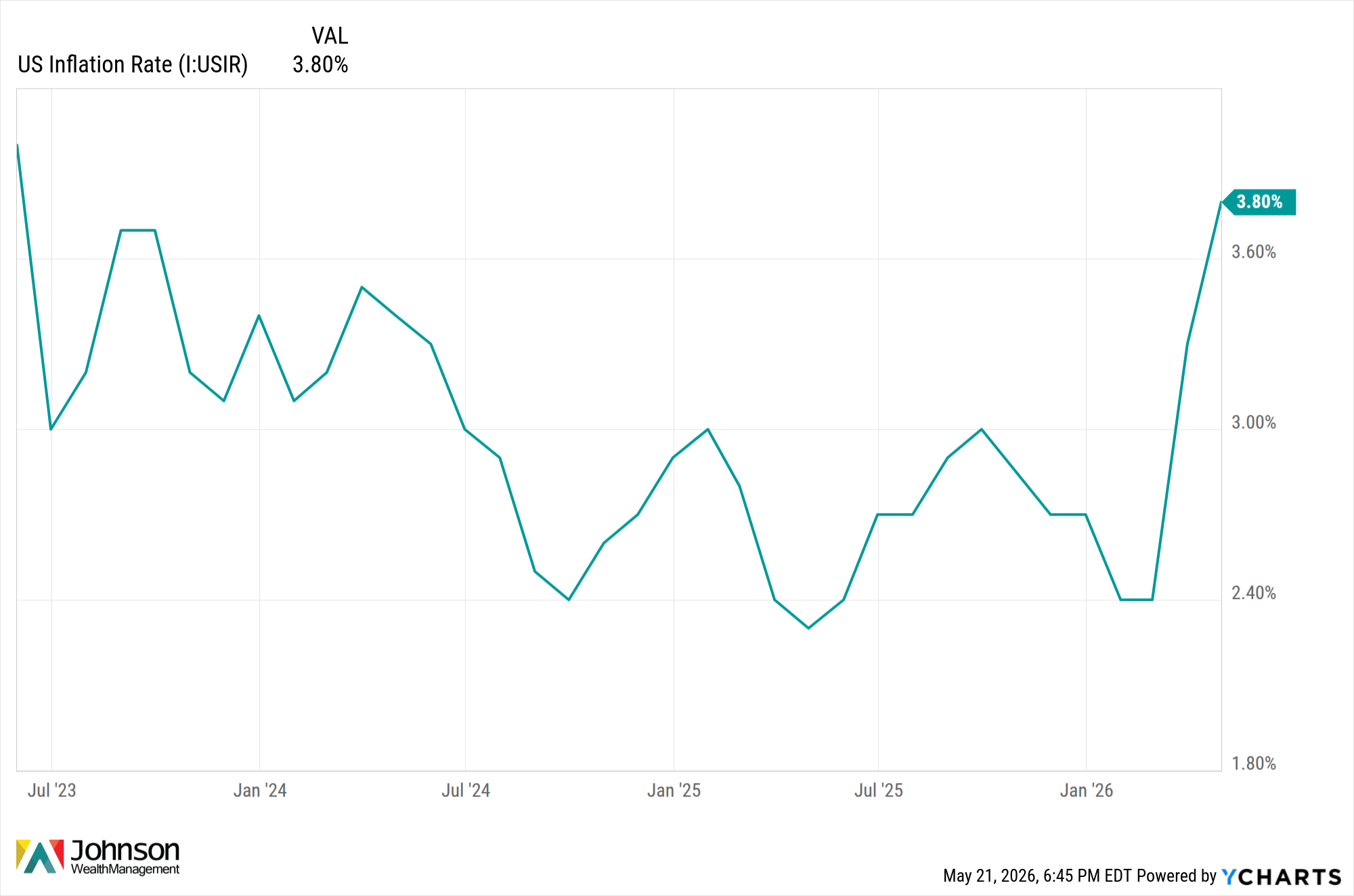
This may be a challenge for the new Fed Chairman, and President Trump’s hope for lower interest rates.
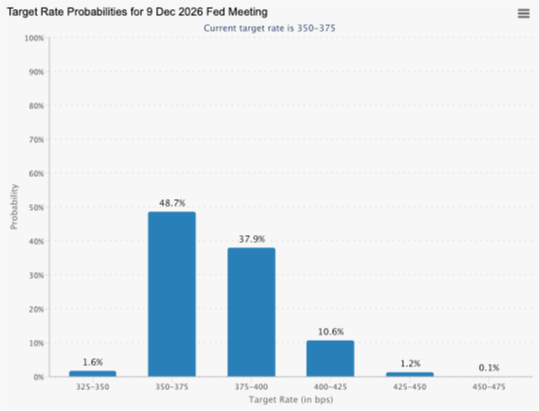
In fact, as of May 20th, 2026, traders are starting to see potential rate hikes this year. Expectations can change, but that’s the current assessment from CME Group.1
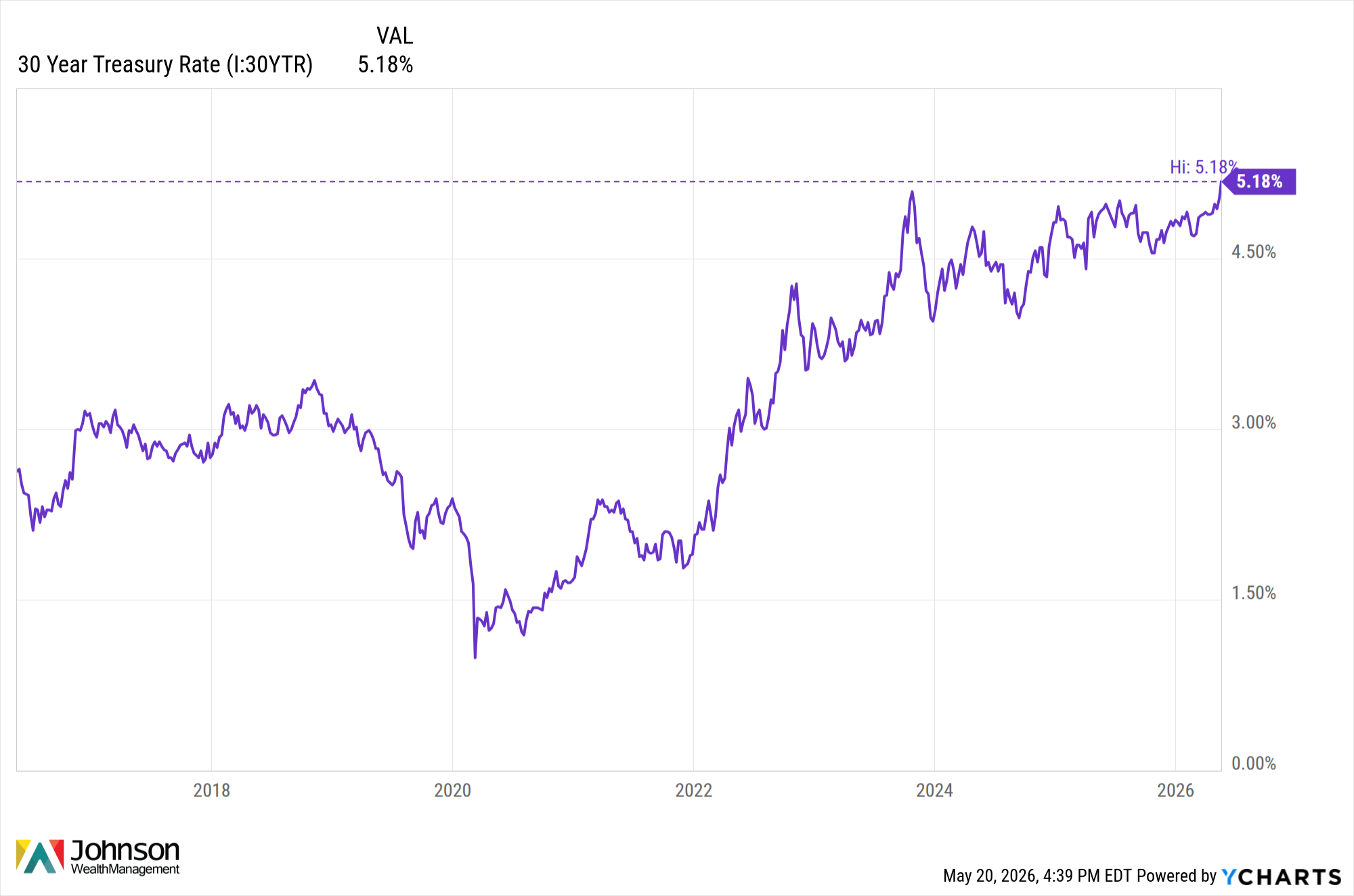
Consequently, the 30-year Treasury is at highs that haven’t been seen in over a decade.
For those interested in capital preservation, bonds have historically been where investors run for safety. They can have their own volatility though.
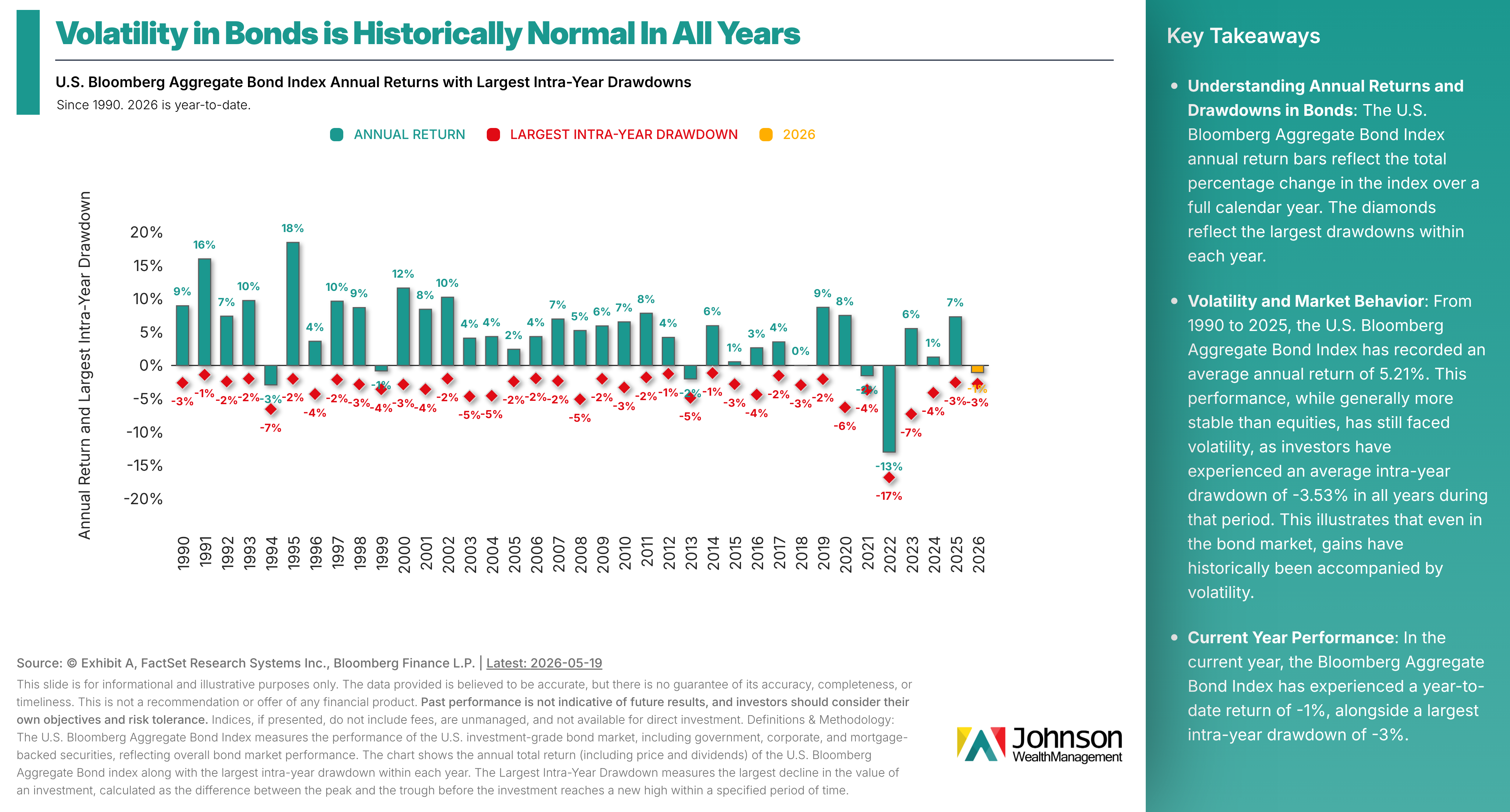
2022’s decline was especially challenging due to rapid interest rate increases and inflationary concerns. On the whole though, bonds bounce around much less than stocks and average less return.
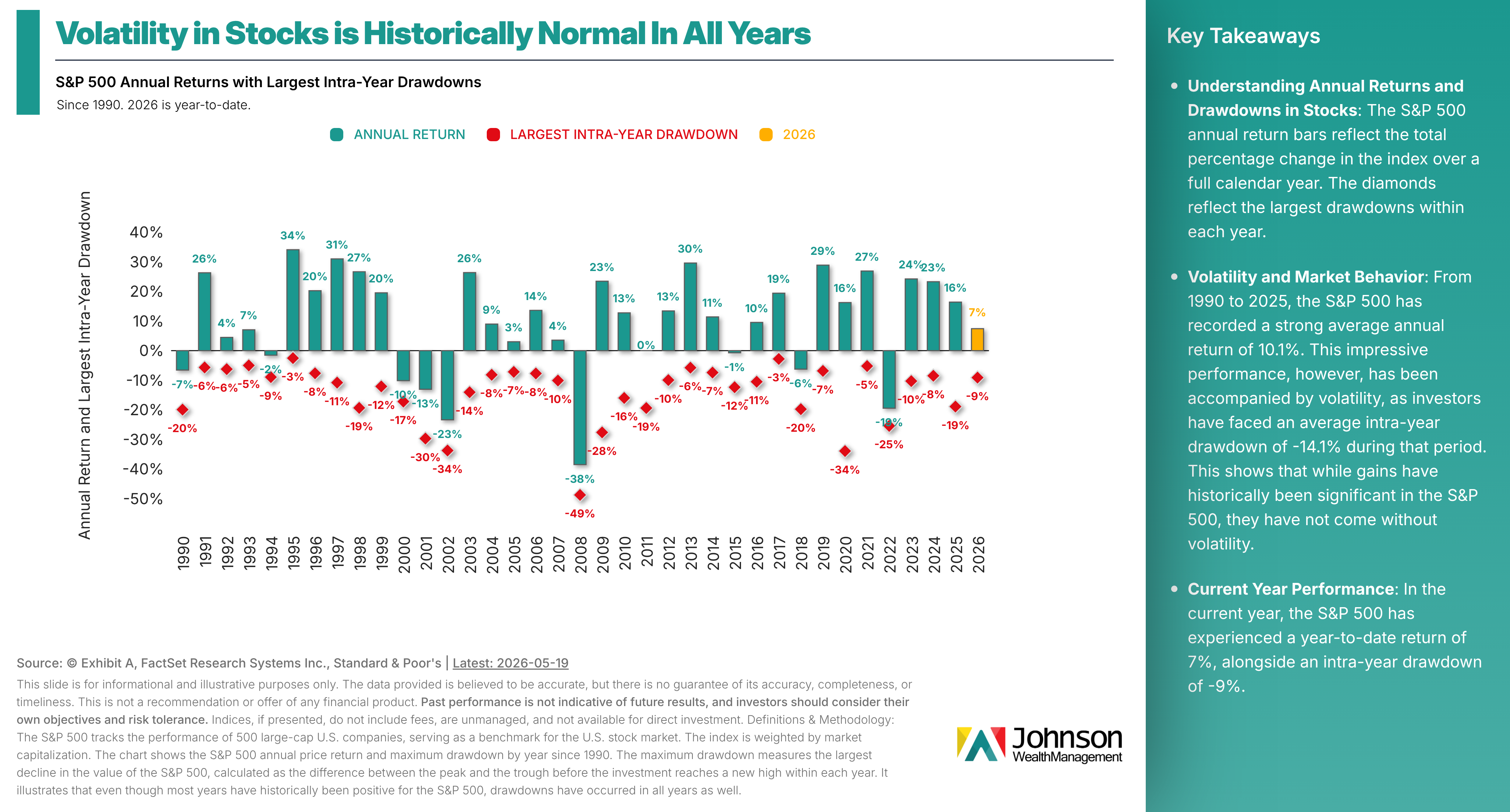
When you compare the above two charts, you find that while stocks average an annual return double that of bonds, they can average about 4 times the magnitude of drawdowns.
Bonds may help you sleep at night, but stocks have been far better at combating inflation. Assuming 3% inflation, a real return of 2% for bonds is nothing compared to the compounding effect of a real return of 7% for stocks.
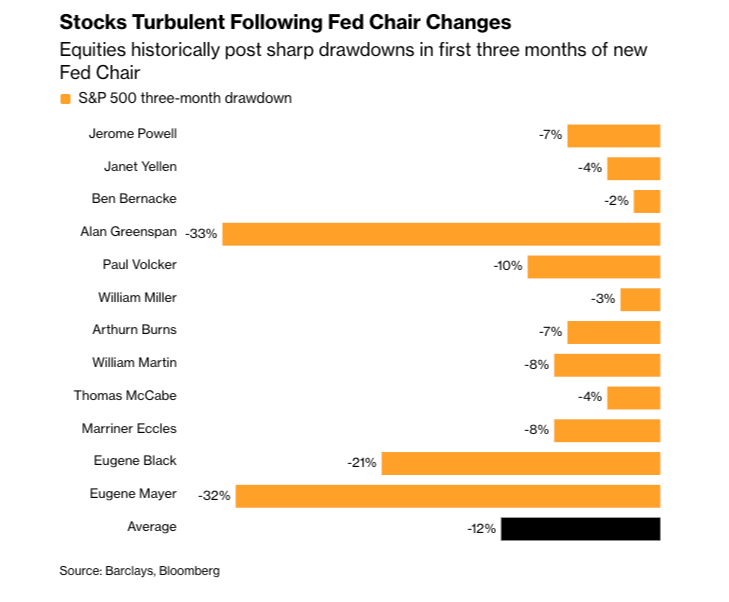
Recently, Bloomberg had one point of interest for those wondering how stocks perform when a new Fed Chair takes the helm. The short-term data isn’t great: stocks have dropped within the first three months.2
Should you be in stocks, bonds, or some variation between the two?
That’s a financial planning question before it’s a trading one.
If you or someone you know needs help navigating interest rates and your portfolio, reach out.
—
Sources:
1. FedWatch. Accessed online on May 20th, 2026.
2. “Inflation Uptick is Starting to Send Sell Signals to Stock Bulls”, May 18, 2026. Accessed online.