


One of the best protectors against the ravages of inflation is the US Stock Market.
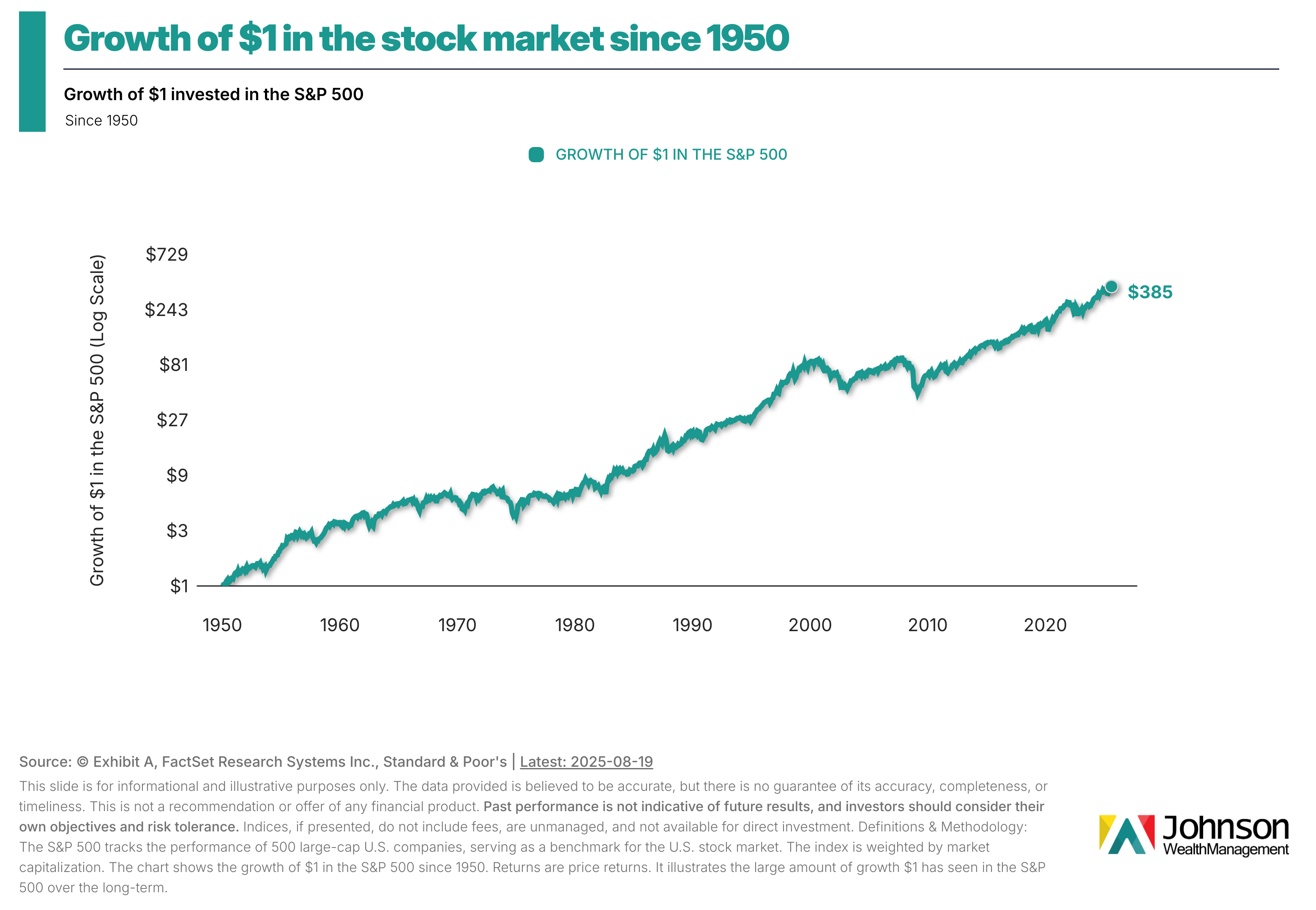
The compound returns of investing in the biggest US companies over time have far outweighed the erosion of the purchasing power of your dollar.
Stocks eat inflation.
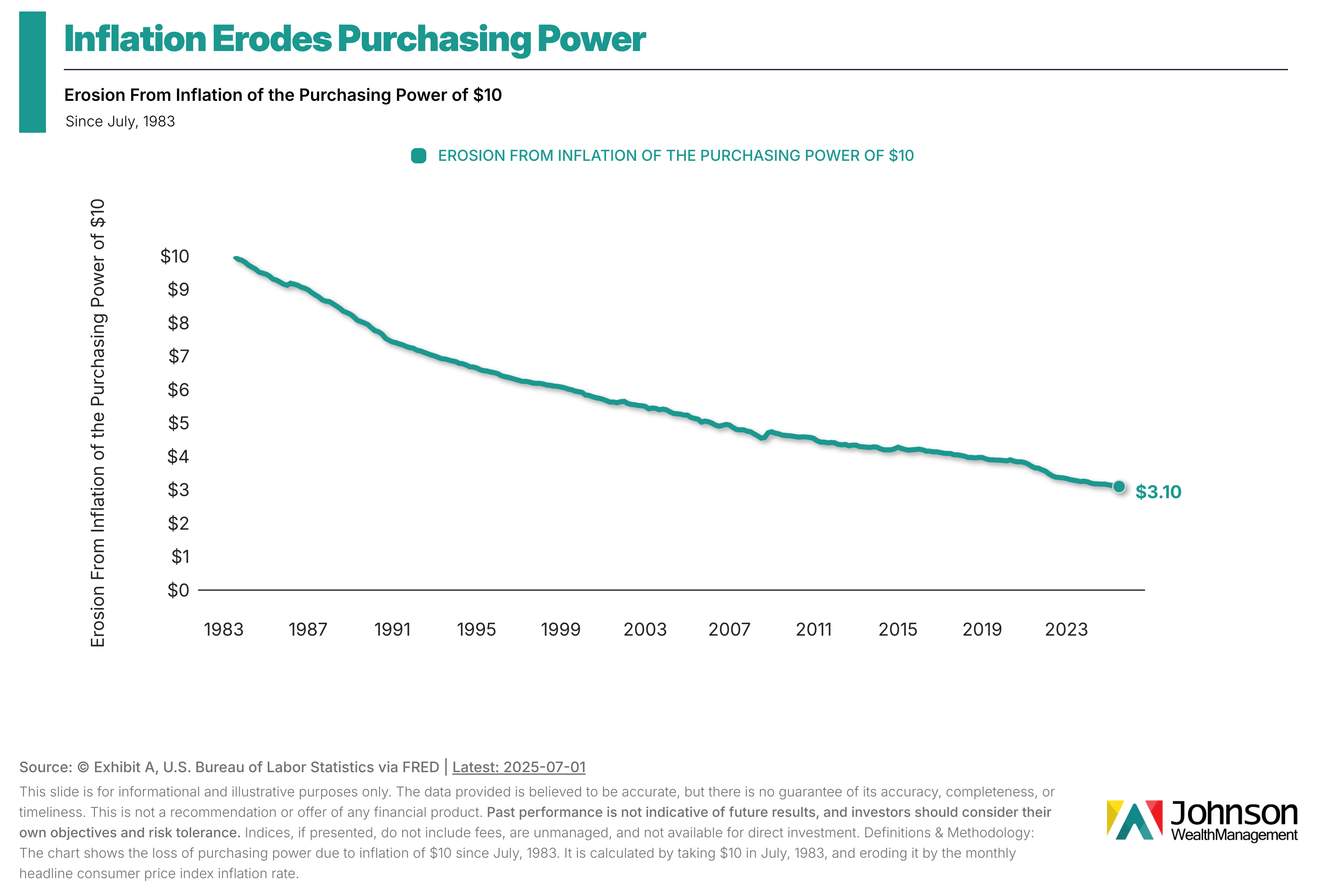
Dollars tucked under your mattress since the 1980s are worth far less than if those same dollars had been invested in the S&P 500.
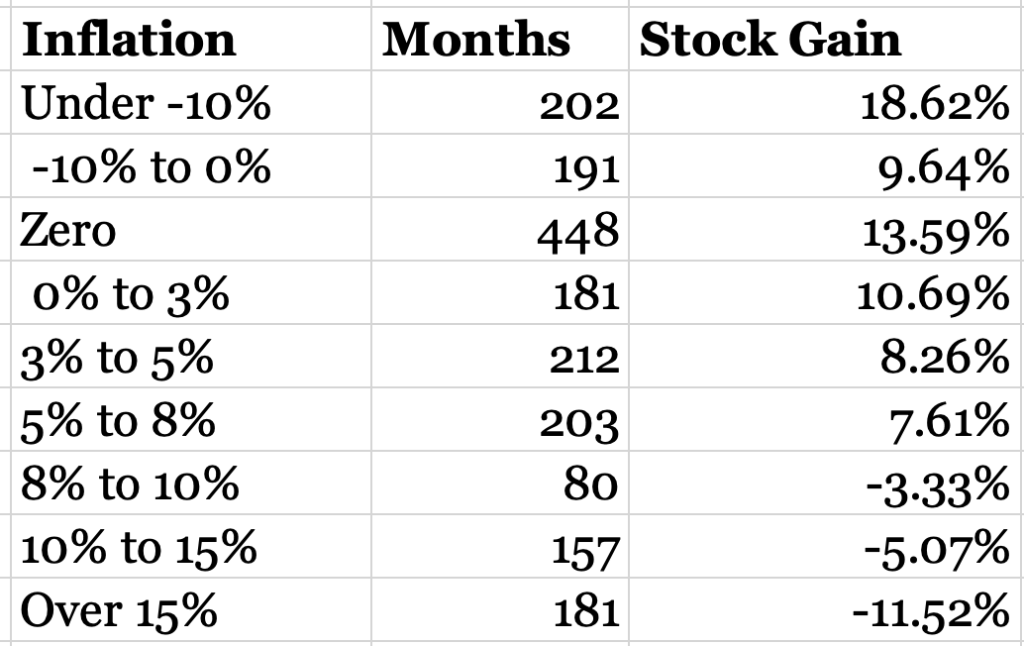
Stocks can also be gobbled up by inflation if it gets too high.
Eddy Elfenbein recently showed that over the last 150 years, the impact of inflation on stocks doesn’t get too bad until about the 7% inflation mark.1
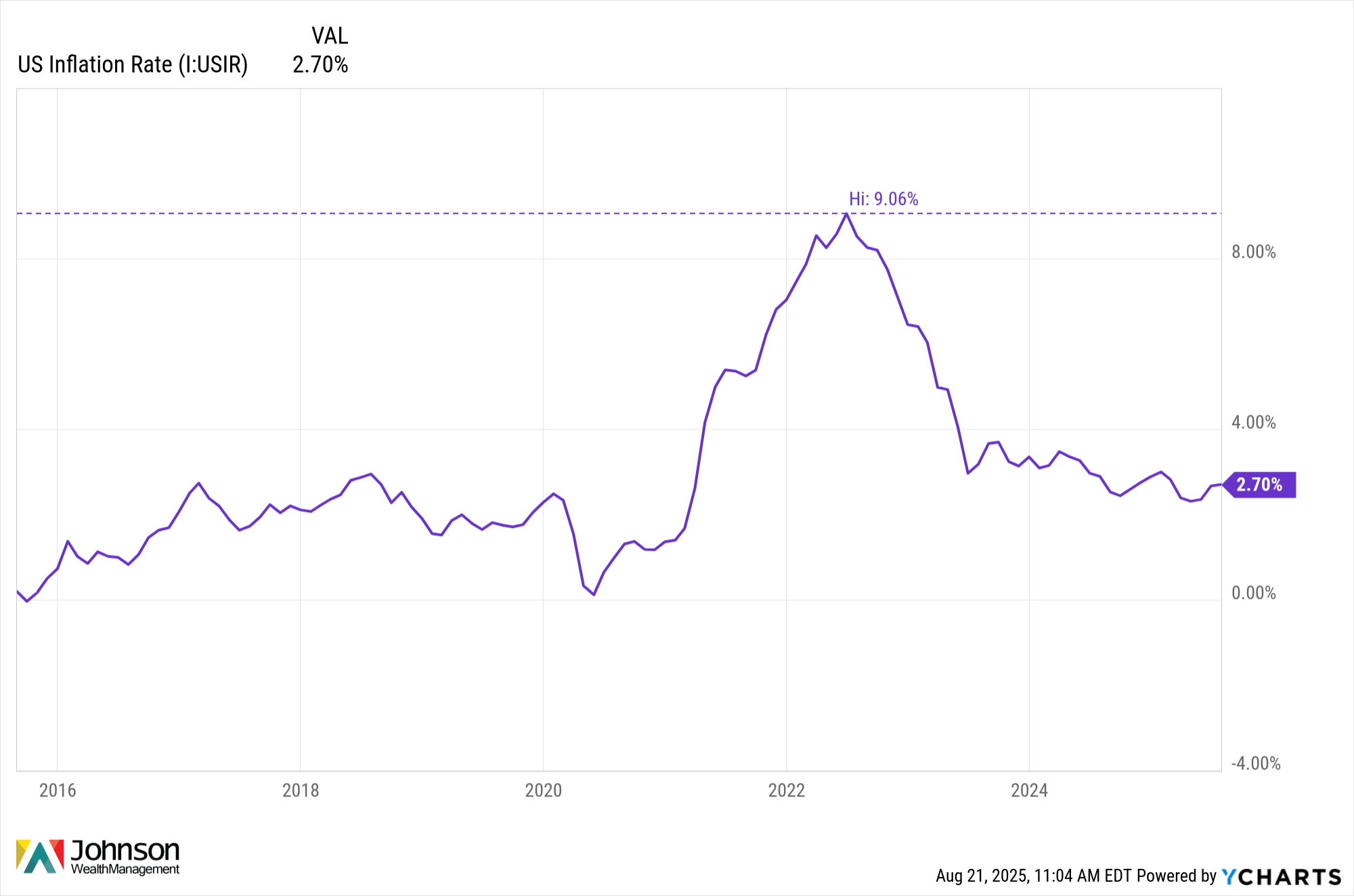
We are nowhere near that right now—at 2.7%—but we were not long ago.
One of the debates right now surrounding whether or not the Fed should cut rates is around the issue of inflation. Those who believe things like tariffs and such may create more inflation tend to want to put the brakes on cutting rates.
Participants generally pointed to risks to both sides of the Committee's dual mandate, emphasizing upside risk to inflation and downside risk to employment. A majority of participants judged the upside risk to inflation as the greater of these two risks, while several participants viewed the two risks as roughly balanced, and a couple of participants considered downside risk to employment the more salient risk. Regarding upside risks to inflation, participants pointed to the uncertain effects of tariffs and the possibility of inflation expectations becoming unanchored.2
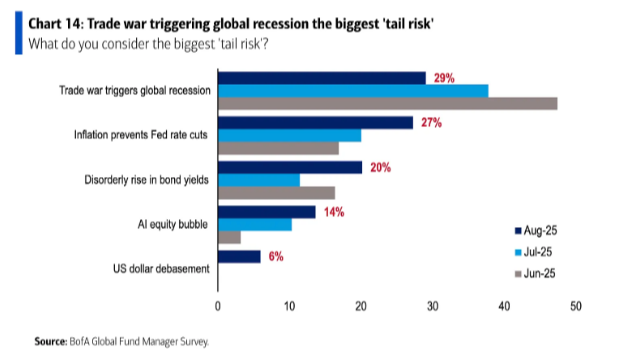
While recent talk of an equity bubble due to AI tech crosses the headlines—with even Sam Altman of OpenAI’s ChatGPT hinting at that—many fund managers acknowledge it as a growing risk, too. But inflation preventing Fed rate cuts and trade wars take the top spot as their highest concerns.3
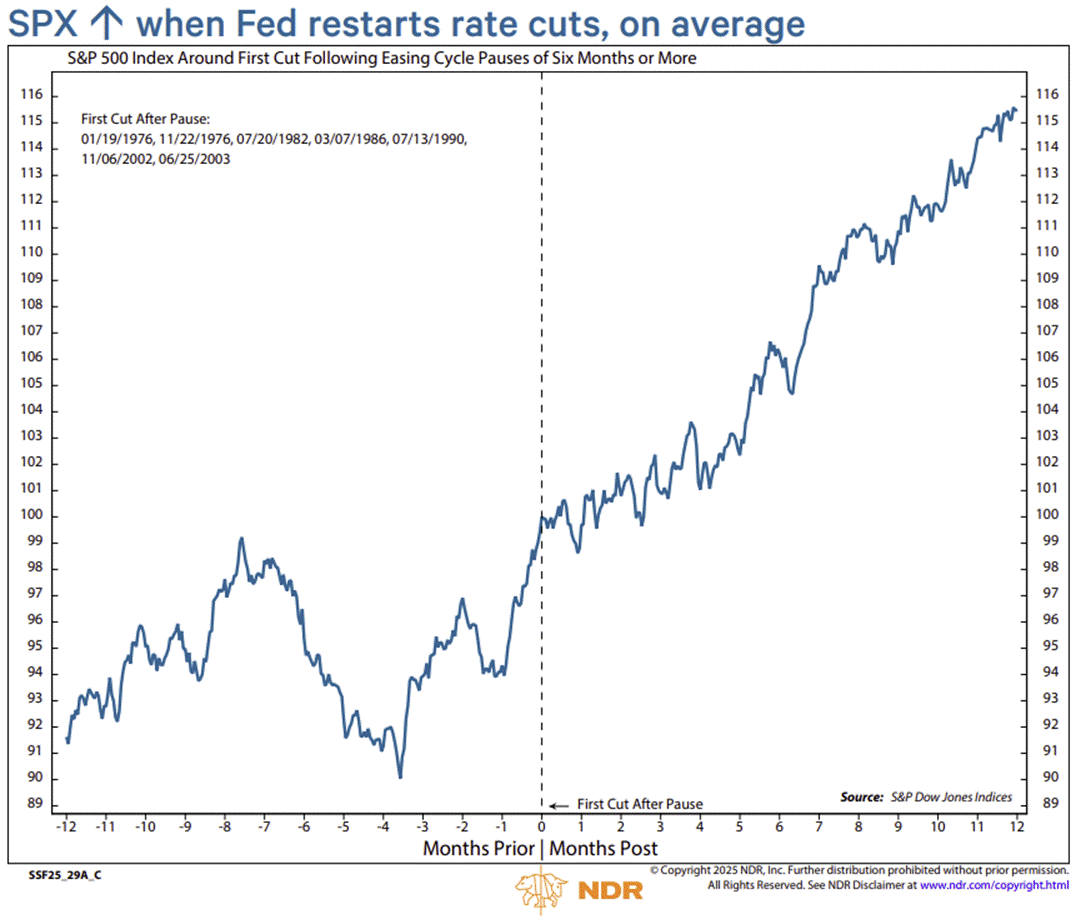
On the other hand, if rates are cut, that can be good for the markets.4
There are always going to be uncertainties and prognostications.
Your job as an investor is to not get caught up in the noise—be it greedy euphoria or fearful forecasting—but to consistently invest according to a financial plan that meets your current needs and future goals.
If you or someone you know needs help tuning out the noise, reach out to us.
--
Sources:
1. CWS Market Review on 8/19/25. Accessed online: https://open.substack.com/pub/cws/p/cws-market-review-august-19-2025
2. FOMC Minutes. Accessed online: https://www.federalreserve.gov/monetarypolicy/fomcminutes20250730.htm
3. Blaine Rollins’ Weekly Research Briefing on August 19, 2025. Accessed online: https://www.hamiltonlane.com/en-us/insight/weekly-research-briefing/weekly-research-briefing-my-sweet-wyoming-home
4. Chart from Blake Millard’s daily email sent 8/21/2025.