


You will probably hear a lot about this time of year being rough for stocks.
This is true.
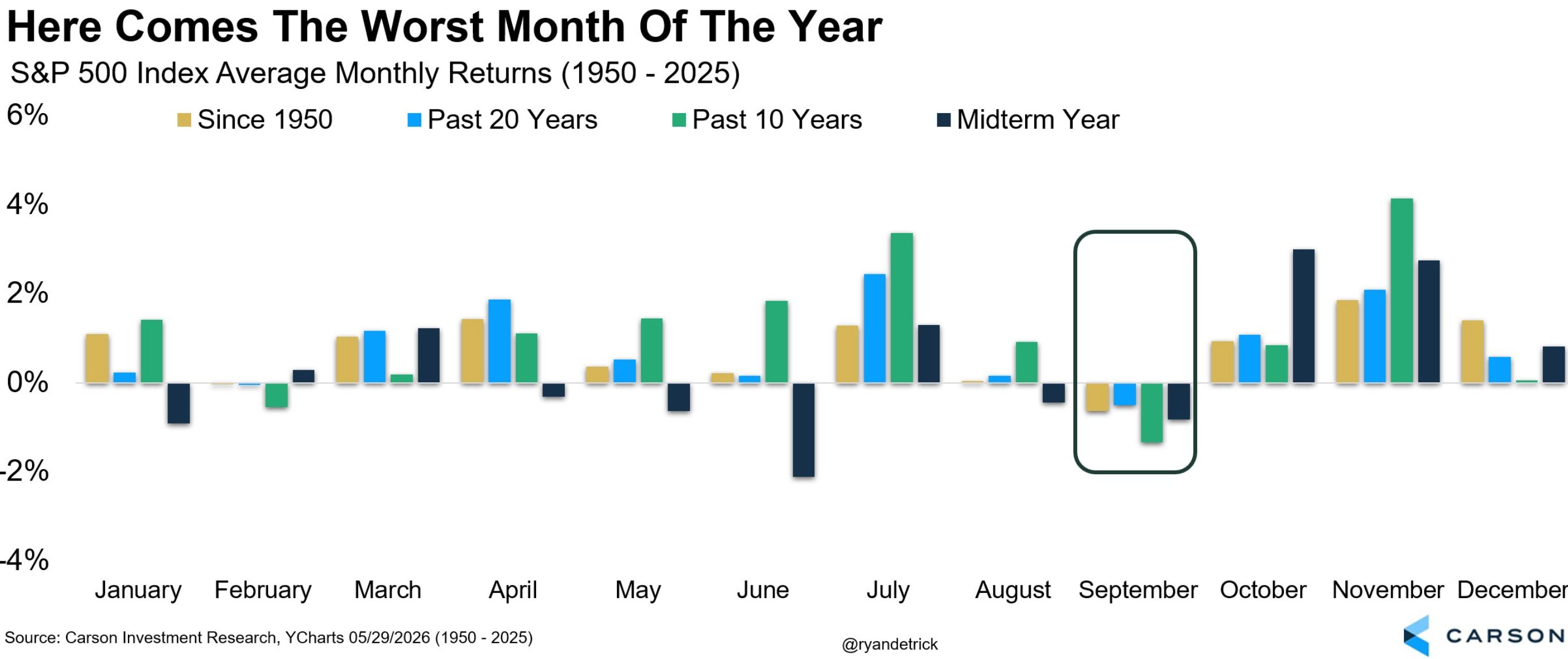
It tends to be the worst month for the S&P 500 over the past decade, the past two decades, and going all the way back to 1950. It is also not a great month—though not the worst—in midterm election years like the one we are in. Ryan Detrick has the data1:
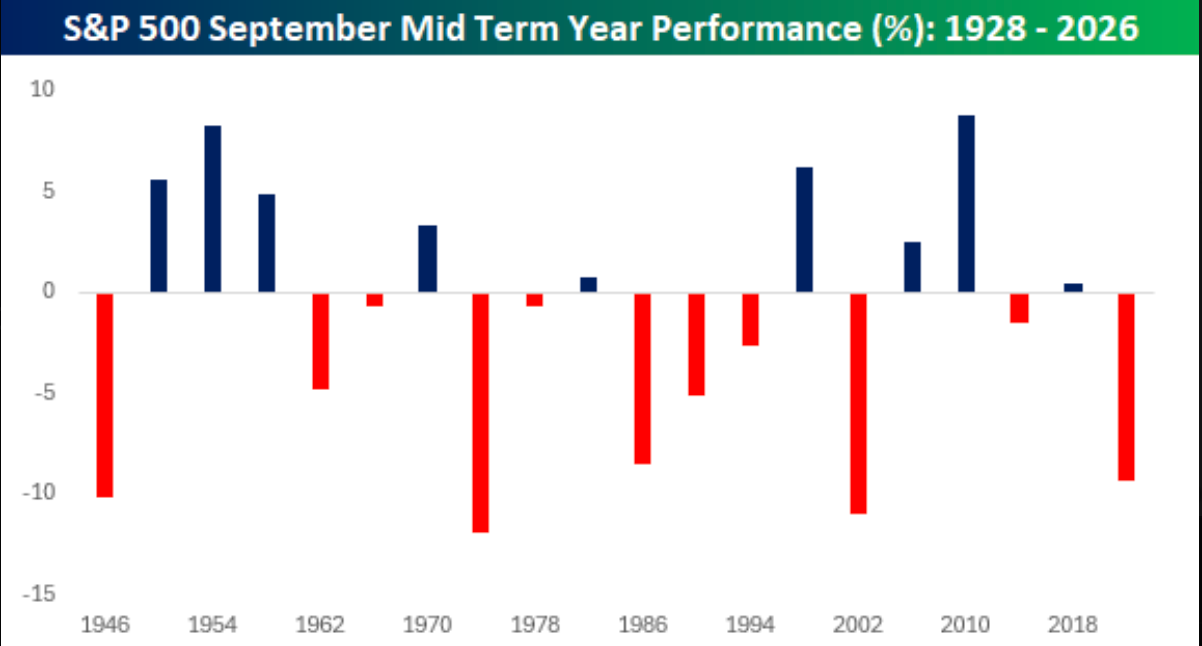
It gets a bit more pessimistic with midterm years if you go out over the longer term though. According to Bespoke Investment Group, since 1926 Septembers average a decline “nearly twice the decline of all years”.2
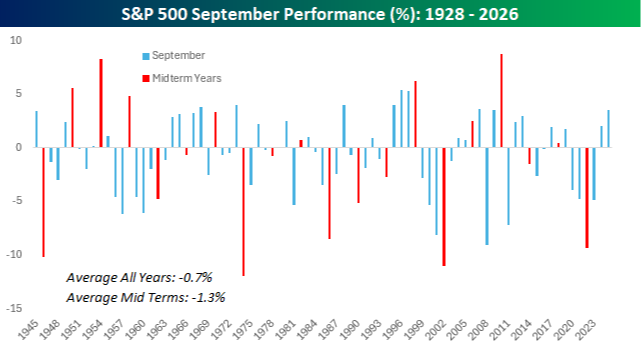
While you should be prepared for this, you should not consider data like this predictive. Bespoke notes that stocks are “just as likely to move more than 5% (up or down) as they are to move less than 5%.”3 Investors should not be surprised, therefore, to experience not only valleys but the possibility of ascents.
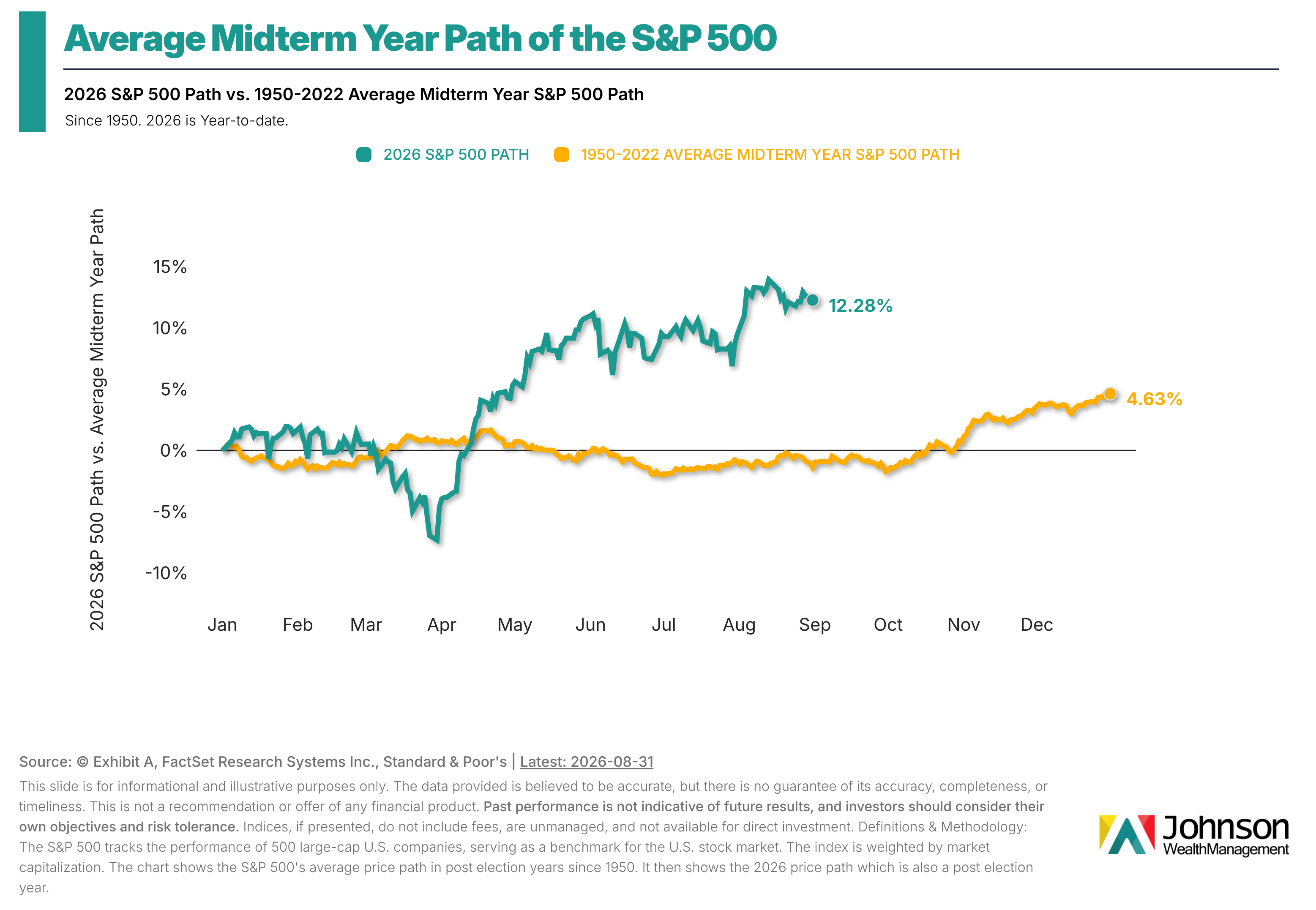
Predicting is hard. So far, the S&P 500’s path this year has looked quite different from typical midterm years.
You can find data to justify several claims, which is why it is always good to remember the mantra that every financial advisor memorizes: past performance is no guarantee of future results.
The problem with making major investment decisions based on the past is that it doesn’t always work. Investment author Nick Maggiulli regretted a prediction he made a year ago about why he thought stocks would go down due to various data points and perceived speculative activity.
Stocks are up substantially since his bearish argument.
No matter what month it is or what is happening in the world that portends thrill or terror, no one knows how the stock market will perform.
Turns out, if you want to go by historical standards, as Maggiulli notes, the base rate probability is that stocks normally go up. He writes,
…the base rate for U.S. stock performance (in aggregate) over one year is that they go up. In fact, historically they went up in 7 out of every 10 years (and around 9% in any given year). This was true when things looked bearish, bullish, and everything in between. This doesn’t mean that they never went down. It doesn’t mean that you can’t lose money. It just means that, statistically, the most likely outcome for U.S. stocks is that they go up.4
Don’t make investment decisions on the probability of one month in the market. Make investment decisions grounded in a financial plan, time horizon, and risk tolerance.
If the author of “Just Keep Buying” can get it wrong, we all can.
Investors should be prepared, but preparing too much for down markets—especially when political rancor heats up this time of year—may also be a mistake for long-term investors.
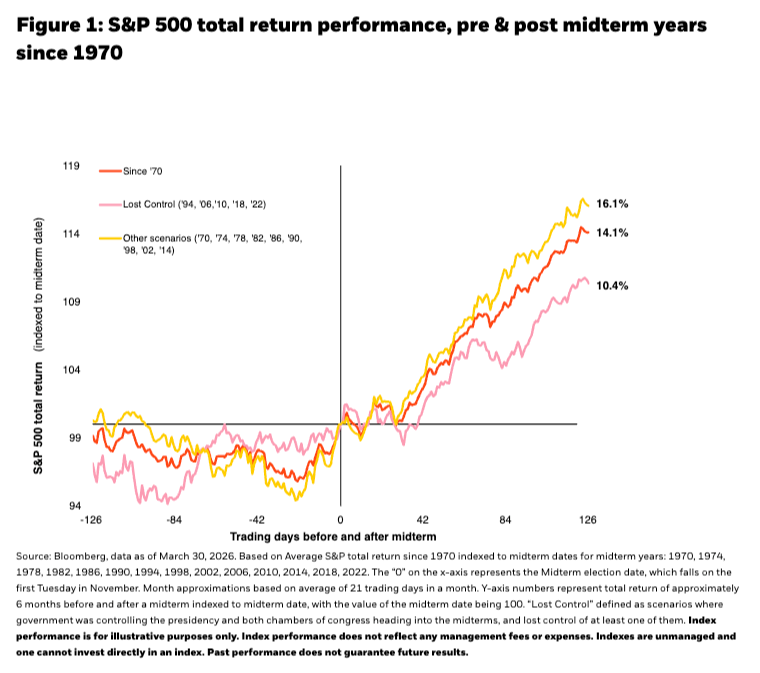
If the lead up to the midterms follows history and winds up being a bit rocky for stocks, one can hope that it also follows history and rallies nicely after the election is over.5
Get ready for politics to be front and center in the media, but you may want to think twice before making them front and center for your investment decisions.
If you need help, reach out to us.
—
Sources:
1. Published on X on August 30, 2026. Accessed online.
2. “It’s About to Get Worse”, August 31, 2026. Accessed online.
3. Published on X on August 31, 2026. Accessed online.
4. “Why I was Wrong to Be Bearish on U.S. Stocks”, August 25, 2026. Accessed online.
5. “What History Shows About 2026 midterm elections and market performance”, Bryan Wood & Mark Peterson, BlackRock. Accessed online.