


It’s everyone’s favorite time of the year.
Tax season.
According to JPMorgan, about 38% of the federal government’s spending for 2025 comes from income taxes.1
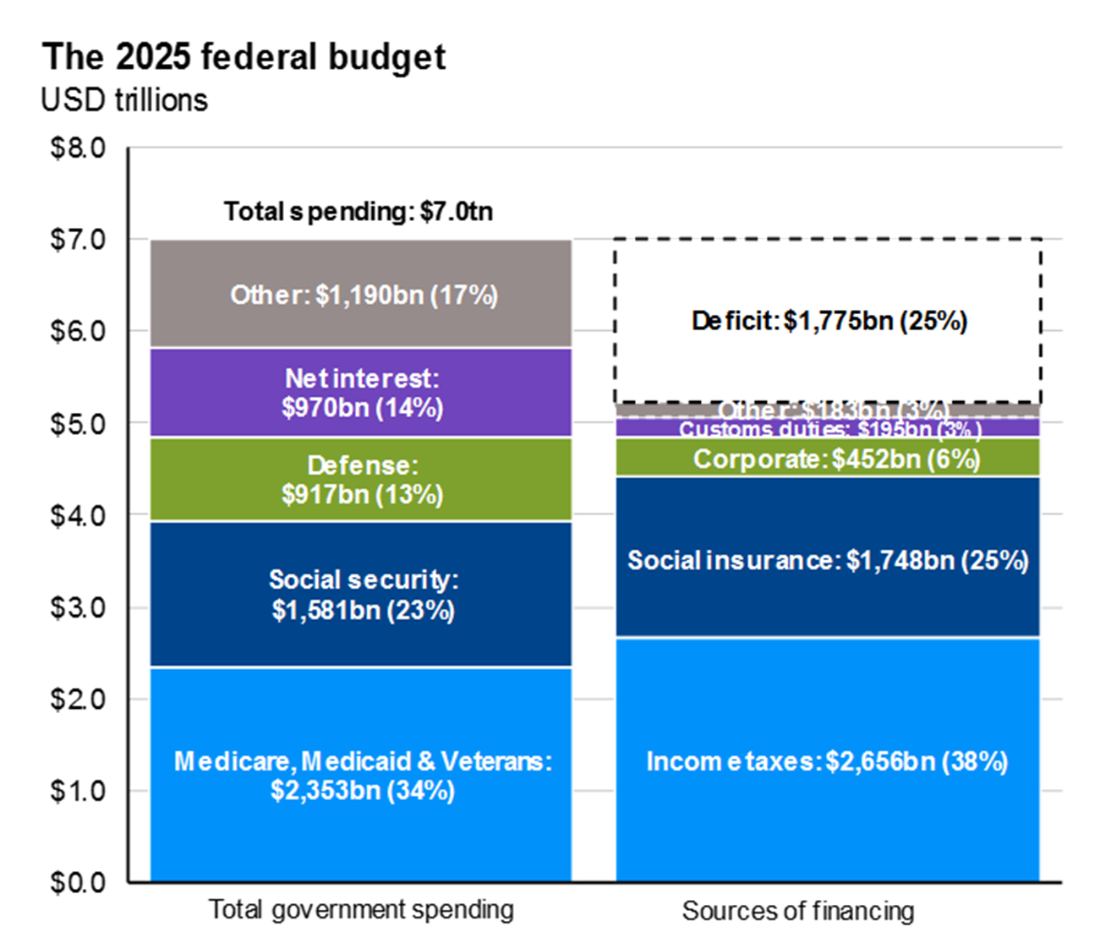
And most of that income tax comes from high earners. The Bipartisan Policy Center states,
The U.S. has a progressive federal income tax system in which higher earners pay a majority of the taxes owed. In 2022, according to the latest data available from the IRS, 122 million filers (76%) had an adjusted gross income (AGI) of $100,000 per year or less. This group accounted for less than 15% of total income taxes paid. In contrast, 24% of filers had an AGI higher than $100,000 and paid 87% ($1.9 trillion) of federal income taxes.2
If you are discouraged by your tax bill, here is a fun fact:
Did you know that the top income tax rates today are well below their averages of the last 100 years?
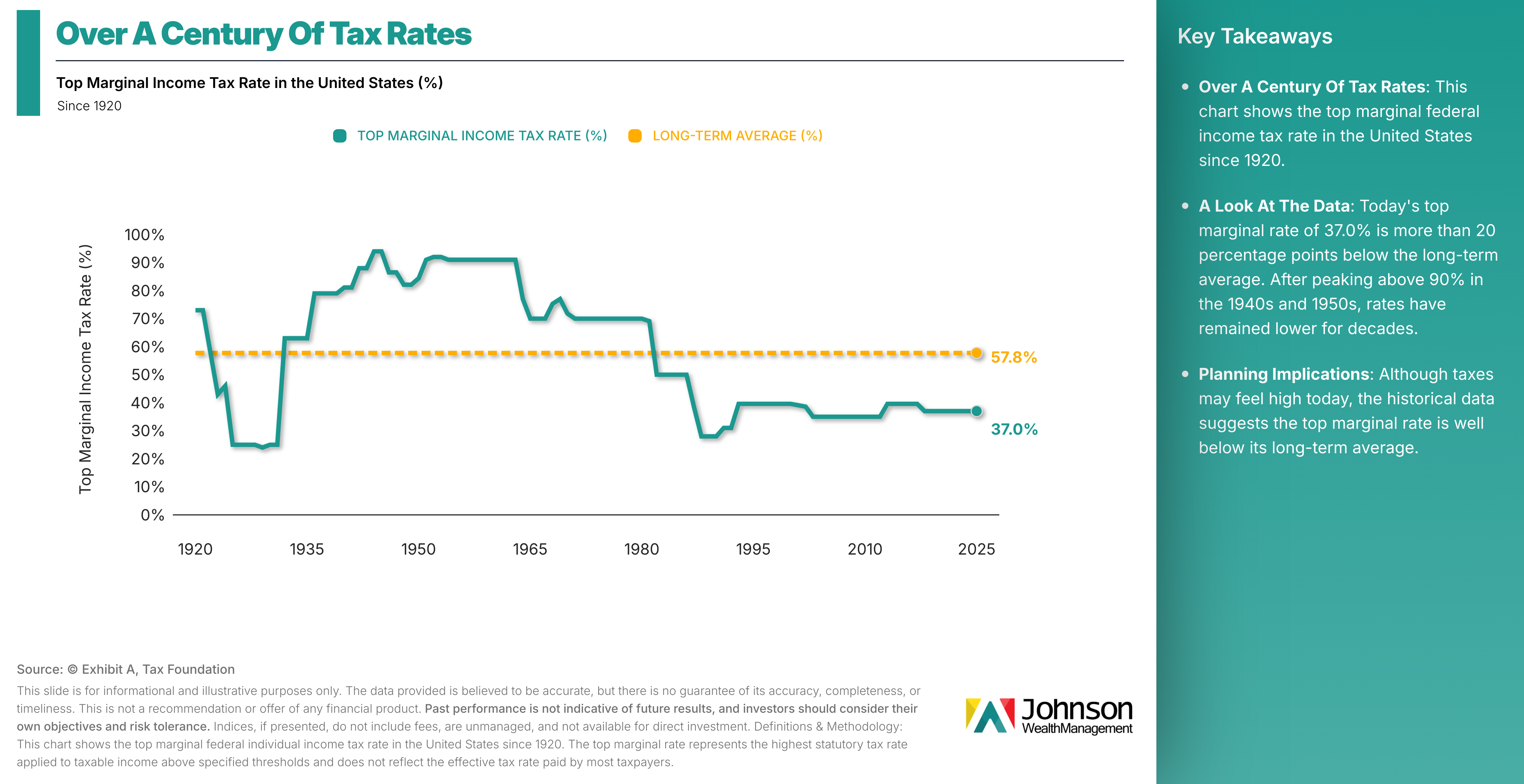
No matter where you are on the income spectrum, many want to find out how to legally give less to the government.
For retirees who are in the stage of life where distributions are required to be taken from their IRAs, one option is the Qualified Charitable Distribution (QCD).
Fidelity describes them this way:
With a QCD, the distribution does not get treated as income to you, reducing your risk of entering a higher tax bracket…
To qualify for a QCD, you must be at least 70½ years old and have funds in an eligible IRA (Traditional, Rollover, or Inherited). The distribution must be made directly from your IRA to an eligible 501(c)(3) charitable organization, with a maximum annual limit of $111,000 per individual.3
For example, let’s say you already give $10,000 to a church every year. Instead of taking that $10,000 from your checking account, you may be able to utilize your required minimum distribution to go directly from your IRA to the church instead. Whether it is a church or not, the key is it needs to be an eligible 501(c)(3) charitable organization.
If you’ve never given to charities before, why not add this to your financial plan?
We don’t give tax advice, and you should always see how the above might fit in your tax planning with a tax professional.
Remember, you should pay your taxes, and you should think through the best way to distribute your money in the most tax-effective ways, so your money is working for you in the wisest way possible.
---
Sources:
1. “Guide to the Markets”, January 30, 2026, page 28. Accessed online: https://am.jpmorgan.com/us/en/asset-management/adv/insights/market-insights/guide-to-the-markets/
2. “What Kinds of Revenue Does the Government Collect?”, May 2, 2025. Accessed online: https://bipartisanpolicy.org/explainer/what-kinds-of-revenue-does-the-government-collect/
3. “Qualified Charitable Distribution”. Accessed online: https://www.fidelity.com/retirement-ira/required-minimum-distributions-qcds