


Investing in the stock market is not for the faint-hearted.
The first half of this decade has been nearly as volatile as an entire decade.
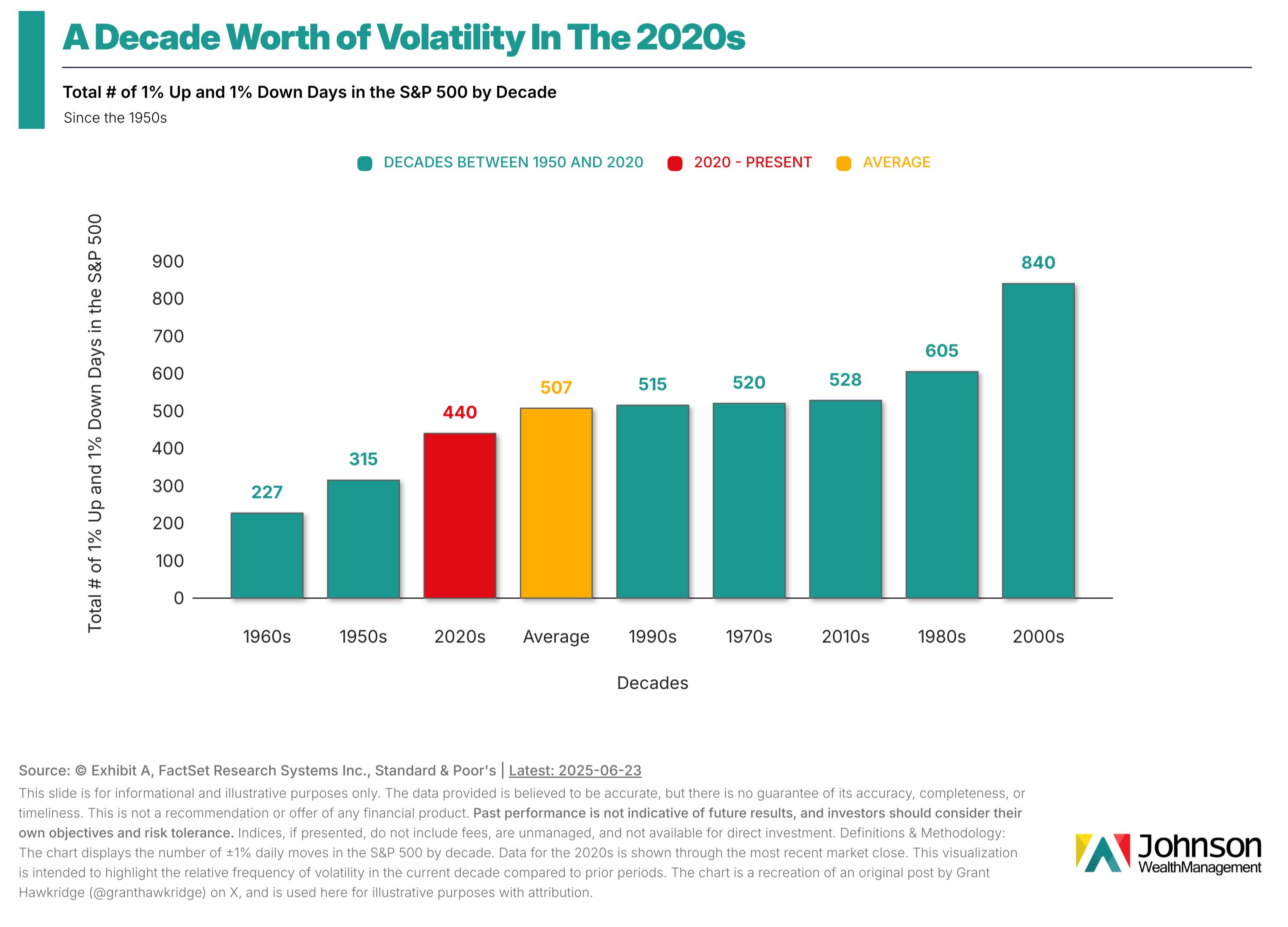
Investing may not have been comfortable in the Roiling 20s so far, but your investment portfolio has likely grown along the way.
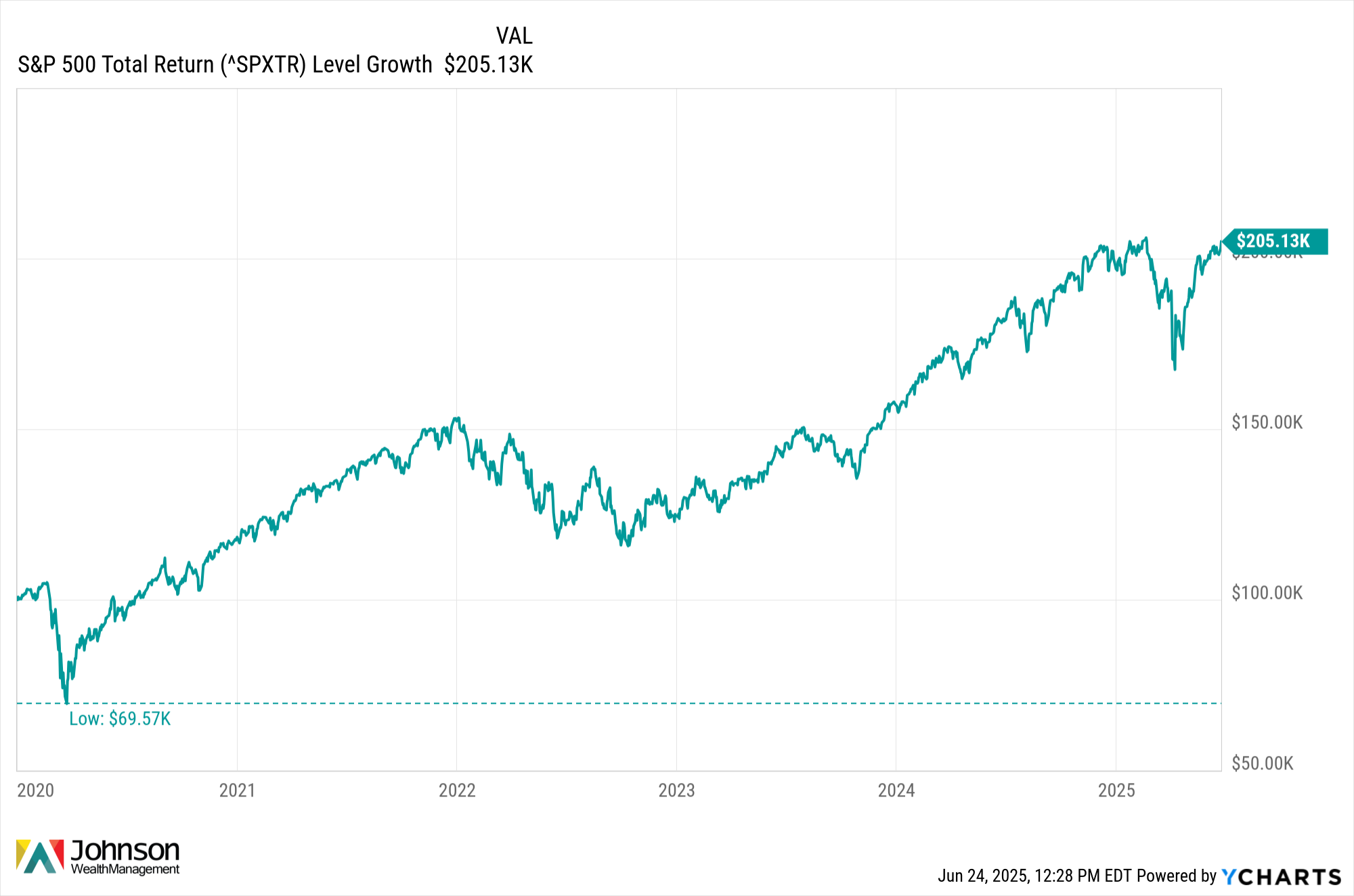
If you had invested $100,000 in the S&P 500 index on the first day of 2020 and left it alone, your portfolio would have doubled by this time in 2025. But my-oh-my, would you have been able to handle watching one-third of it disappear within the very same year you began investing?
If you have made it through, congratulations—you are experiencing the benefits of antifragility.
In a 2012 Wall Street Journal article titled “Learning to Love Volatility”, Nassim Nicholas Taleb wrote:
Things that are antifragile only grow and improve under adversity….
We all know that the stressors of exercise are necessary for good health, but people don't translate this insight into other domains of physical and mental well-being. We also benefit, it turns out, from occasional and intermittent hunger, short-term protein deprivation, physical discomfort and exposure to extreme cold or heat. Newspapers discuss post-traumatic stress disorder, but nobody seems to account for post-traumatic growth. Walking on smooth surfaces with "comfortable" shoes injures our feet and back musculature: We need variations in terrain.
Modernity has been obsessed with comfort and cosmetic stability, but by making ourselves too comfortable and eliminating all volatility from our lives, we do to our bodies and souls what Mr. Greenspan did to the U.S. economy: We make them fragile. We must instead learn to gain from disorder.1
Hard things make you stronger. Eliminating risk can eliminate growth. An infatuation with safety can be risky. No pain, no gain.
These kinds of maxims are endless, but not easy to practice in the middle of real life.
None of this means you should be all-in on the stock market, but it does mean that appropriate risk-taking can be necessary to flourish as a human being and an investor.
Once again, the interplay between wisdom for investing and wisdom for life intersects.
I can’t predict the future, but I would expect more volatility.
The question is: Will you be an antifragile investor?
---
- Published at the Wall Street Journal, November 16, 2012. Accessed online: https://www.wsj.com/articles/SB10001424127887324735104578120953311383448